
Australian Natural History:
Celebrating the Koala
Photography Steve Parish – Text Karin Cox
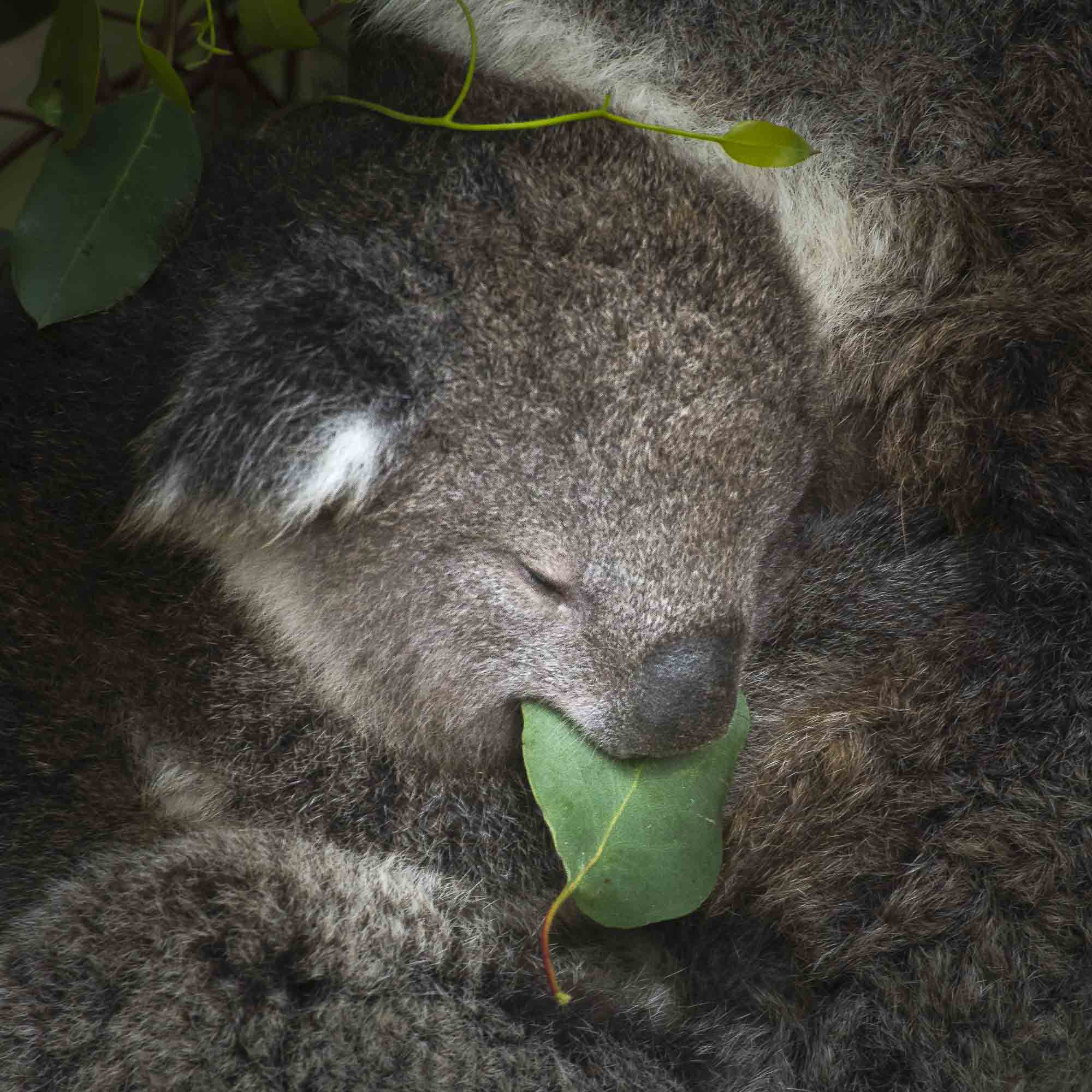
In 1803, the Sydney Gazette commented on the first live specimen of a Koala captured by Europeans, stating that “the graveness of the visage … would seem to indicate a more than an ordinary portion of animal sagacity…” Sage the Koala may not be — indeed its brain anatomy is among the most simplistic in the Marsupialia subclass — but with its front-facing eyes and humanoid appearance, its characteristic tenderness towards its offspring, and its languid lifestyle, the Koala is the marsupial Australians most readily identify with. Something about this fluffy, sleepy, unassuming marsupial resonates with the collective Australian psyche and also enchants visitors from worldwide — so much so, that the Koala alone contributes more than 3.4 billion dollars annually to Australia’s tourism coffers.


While not in any way related to the placental bears of Europe and America, it is easy to see why the Koala’s scientific name Phascolarctos cinereus means “ash-grey pouched bear” when translated from Latin. These charismatic folivores, with their relaxed way of life, resemble a cuddly childhood soft toy, and it is this unique vulnerability that has made them the mammal most synonymous with this continent. Indeed, they are also inextricably linked with the evolution of this harsh land, dining as they do solely on another national icon — the gum tree.


Variable features
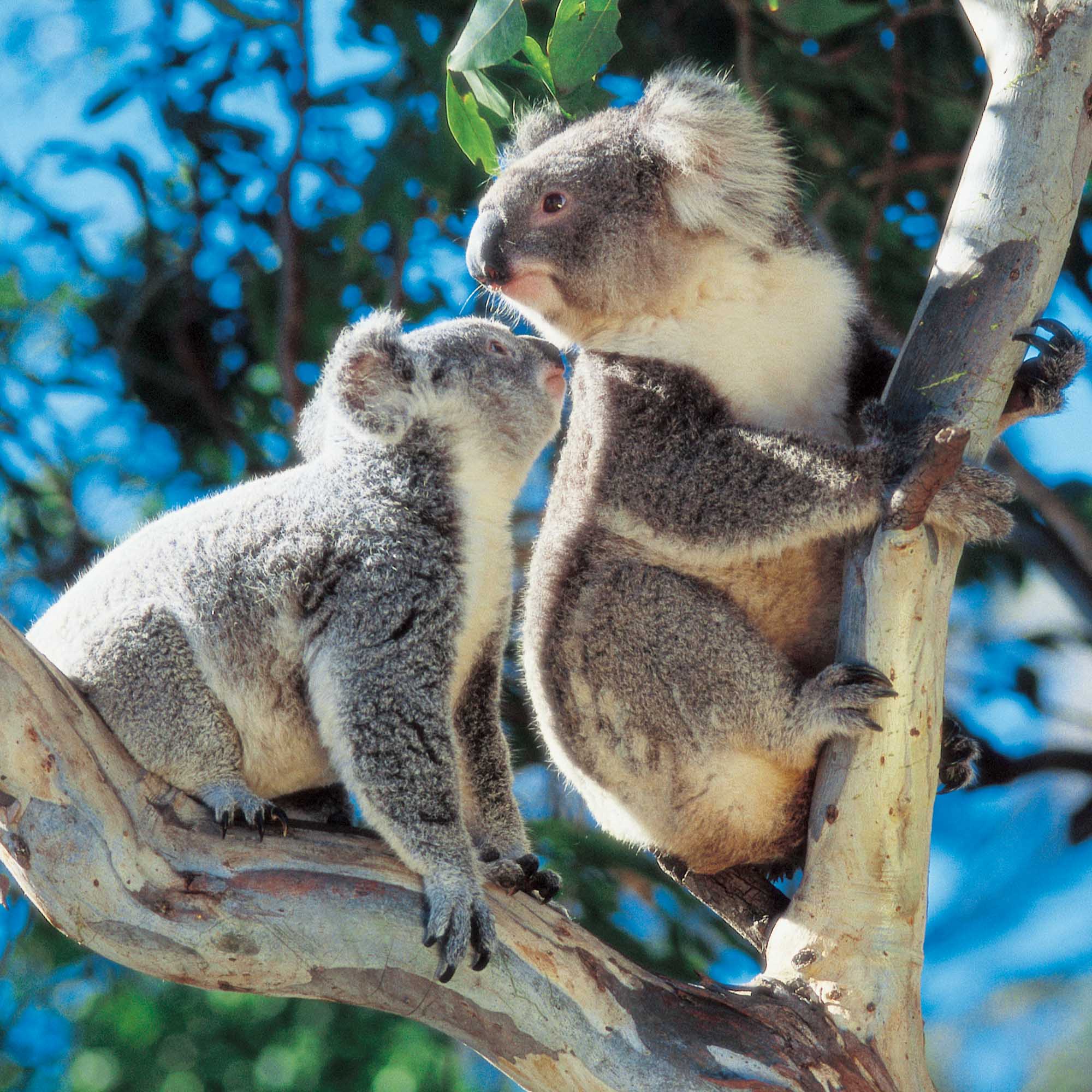
Few could mistake the woolly, large-nosed Koala for any other creature. Those in Queensland (above right) are both paler and smaller than their southern relatives (above left), weighing just 5 kg on average compared to 9–14 kg in the southern States, where Koalas are fluffier with larger ears and a slate-grey or brownish-beige colouring, rather than silvery grey. All are tail-less and females have a rear-opening pouch. Males are about 50% larger than females.

Habitat and distribution
Koalas dwell in eucalypt forests and open woodlands that stretch in a belt along the coast and hinterland from Qld to Vic. They do not inhabit WA or Tasmania and have been introduced to Kangaroo Island, SA, with disastrous consequences. In the cooler climes of the south, they prefer low-altitude forests and sclerophyll forests on coastal plains and hinterlands. In the north they inhabit mostly coastal woodlands and riverine woodlands.


Diet
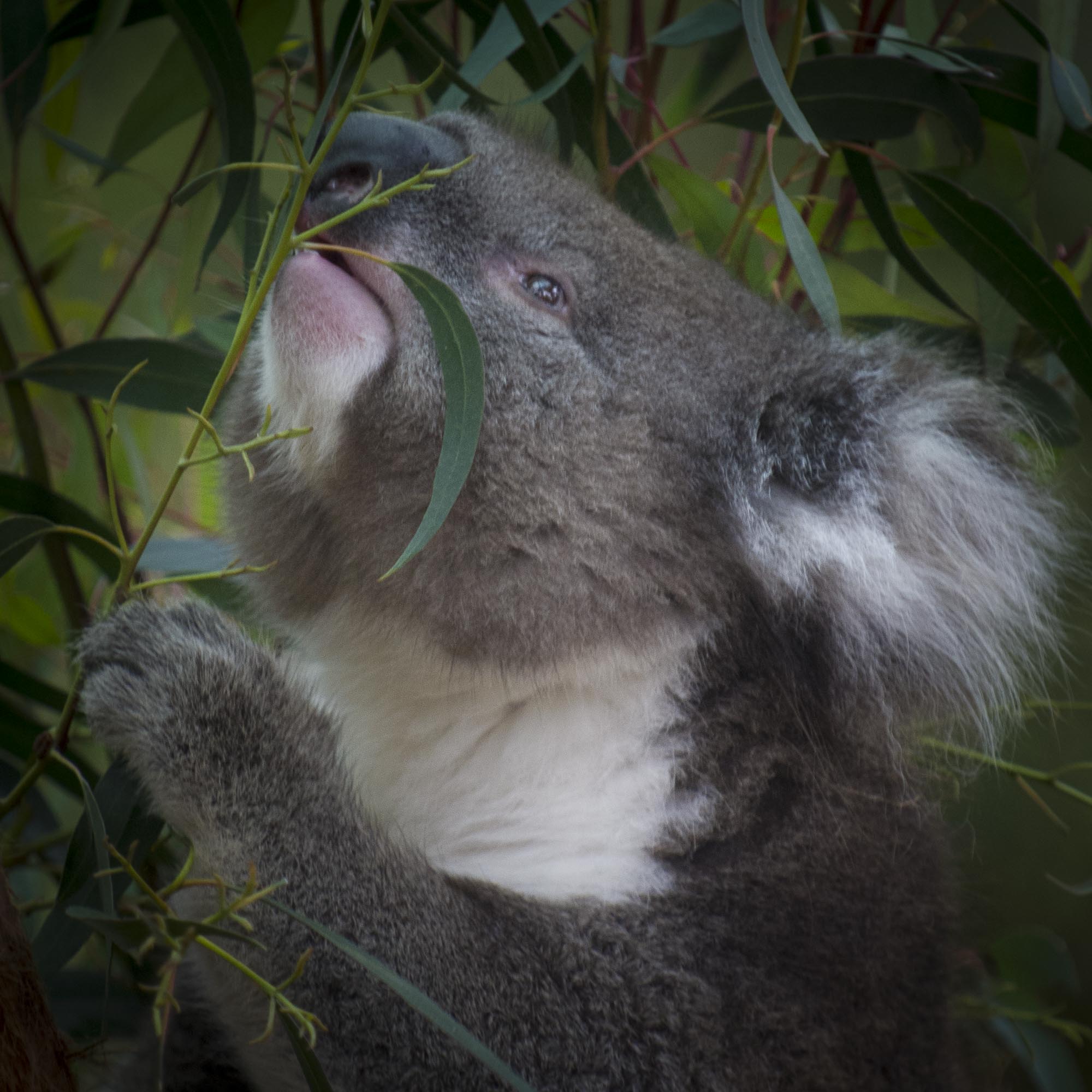
Gum leaves and their flowers, stems, shoots and bark are fodder for this peculiar dietary specialist that subsists only on a small percentage of Australia’s 800-odd eucalypt species, varying their preferred trees depending on season and location. Manna Gum (E.viminalis), Blue Gum (E.globulus) and Swamp Gum (E.ovata) are preferred in the south, while Tallowwood (E.microcorys), River Red Gums (E. camaldulensis) and grey gums (E. punctata and E.
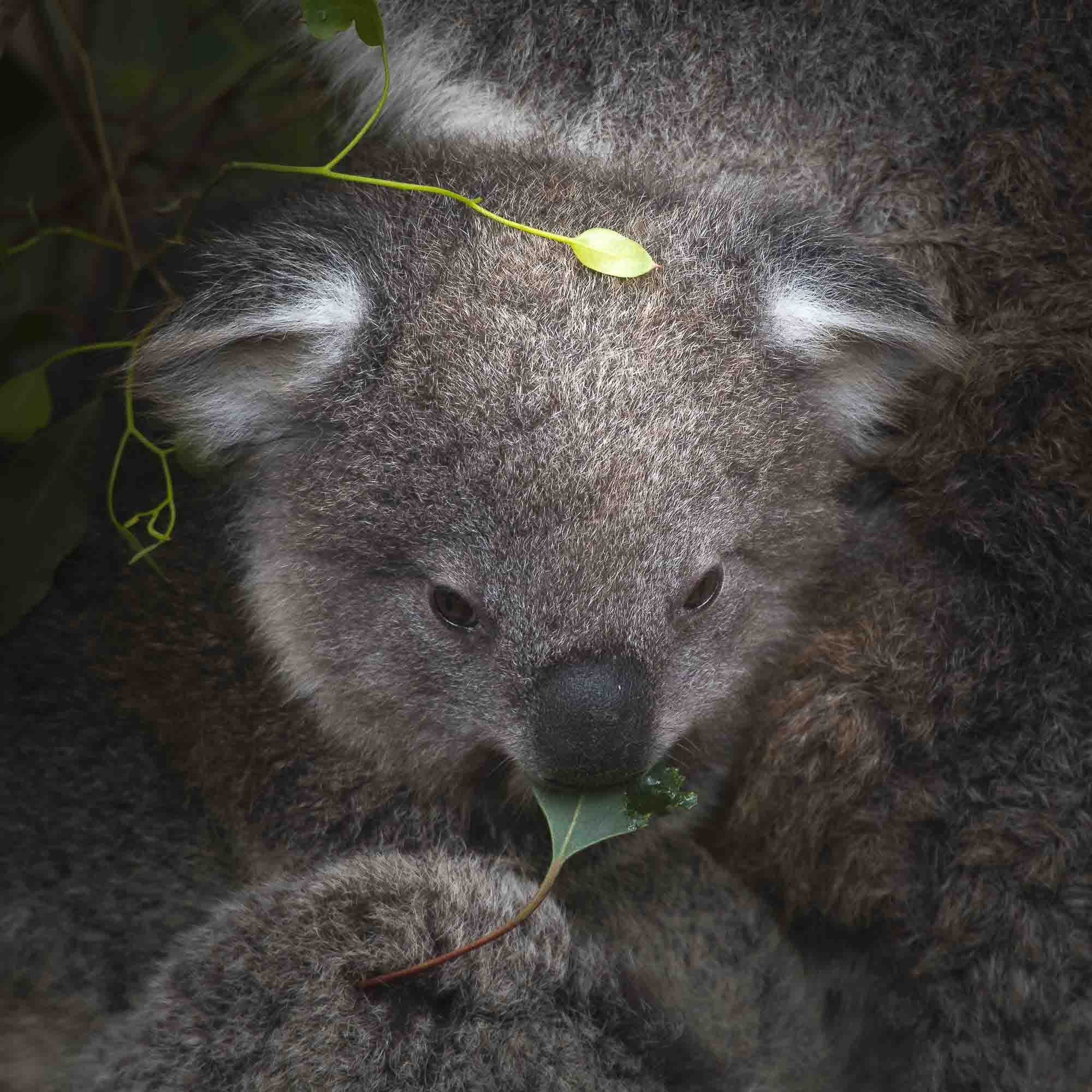
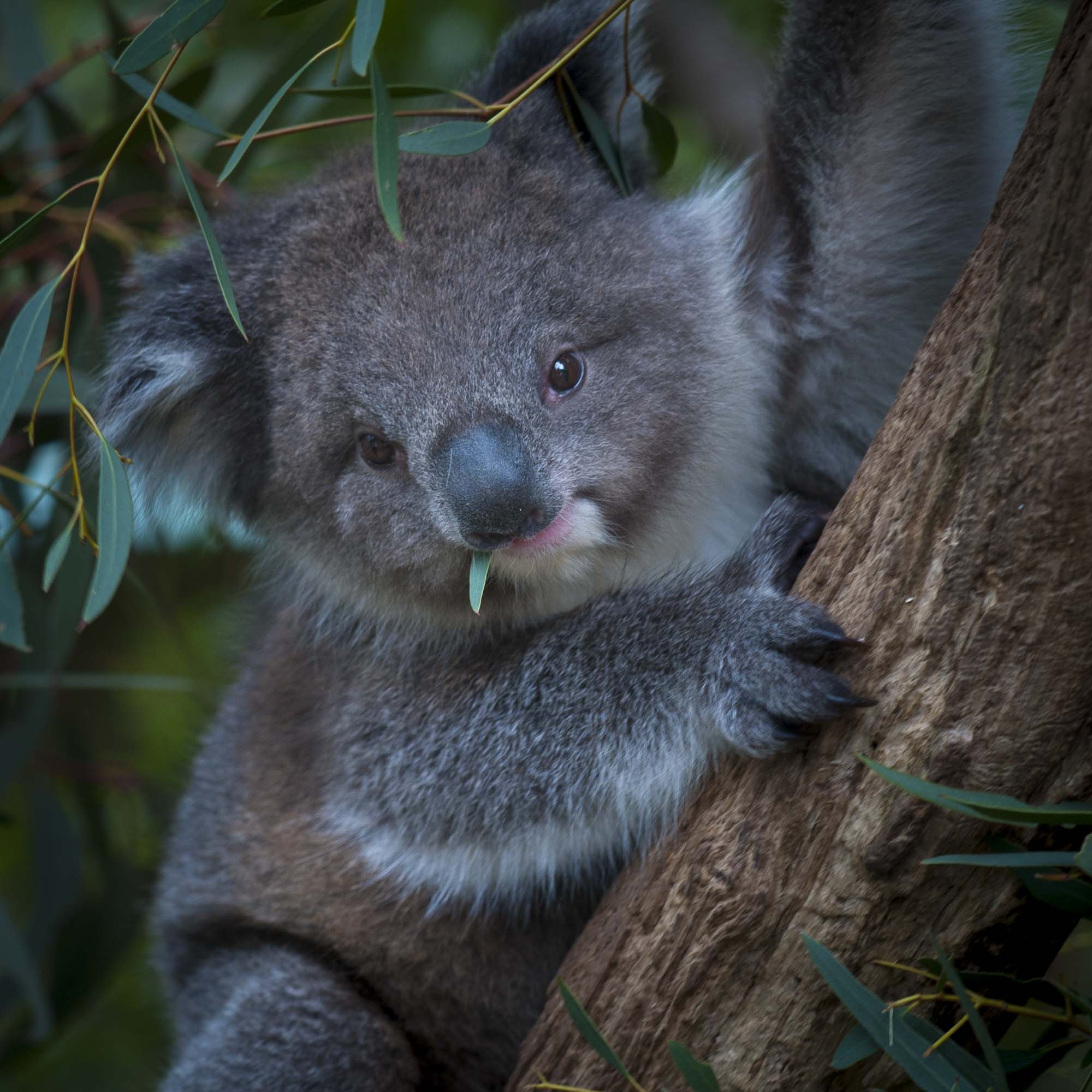
propinqua) are among the staples for those in the north. Toxicity is high in many eucalypt species, so leaves are thoroughly sniffed before being directed to the mouth, avoiding those that are high in tannins or eucalyptus oils. Rather than use the forepaws to strip a stem, a Koala strips off leaves using its teeth and chews them thoroughly before swallowing. Branches and stems with young leaves (but not new leaves) are stripped and leaves may be selectively eaten from more mature stems.
Above centre a Koala’s skull showing the large nostrils, grinding molars and narrower cranium.

Lifestyle
Unlike their relatives the wombats, Koalas have no need for burrows, dens or nests and spend all their time sitting (and mostly snoozing) in the fork of a tree. A dense, well-insulated coat keeps the Koala warm and dry in most weather, and a well-padded bottom acts as a natural cushion. Koalas come to ground only to move between trees or patches of suitable habitat or to drink in times of drought. Home ranges vary due to habitat availability and the population of Koalas in the area. In a high density region, each may inhabit a compact range of just 1–2 ha which overlaps with that of others (for females). In less densely populated areas, or those where food trees are scarce, they may have a range or 100 ha or more. Male territories exceed those of females in size and overlap the ranges of several females.

Breeding
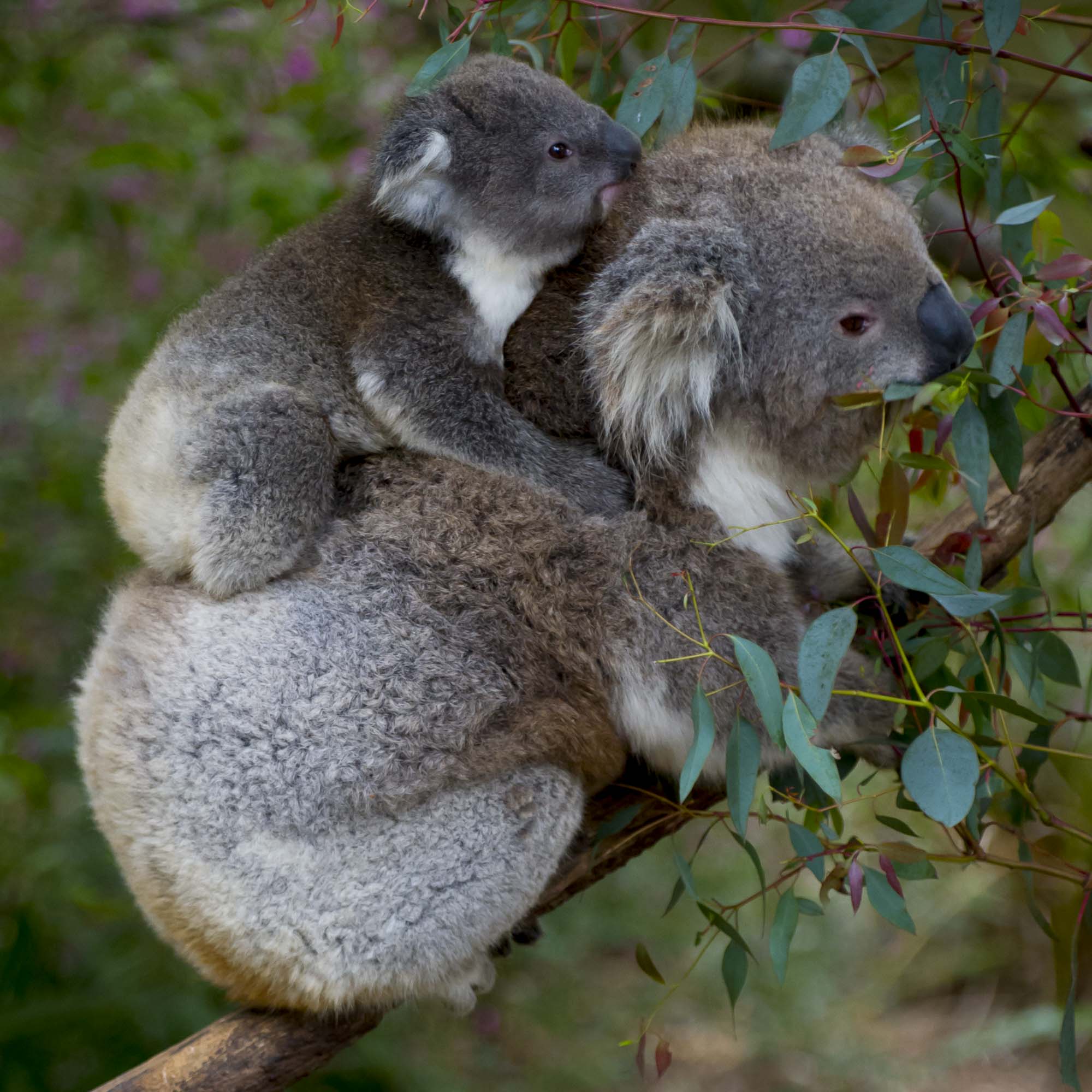
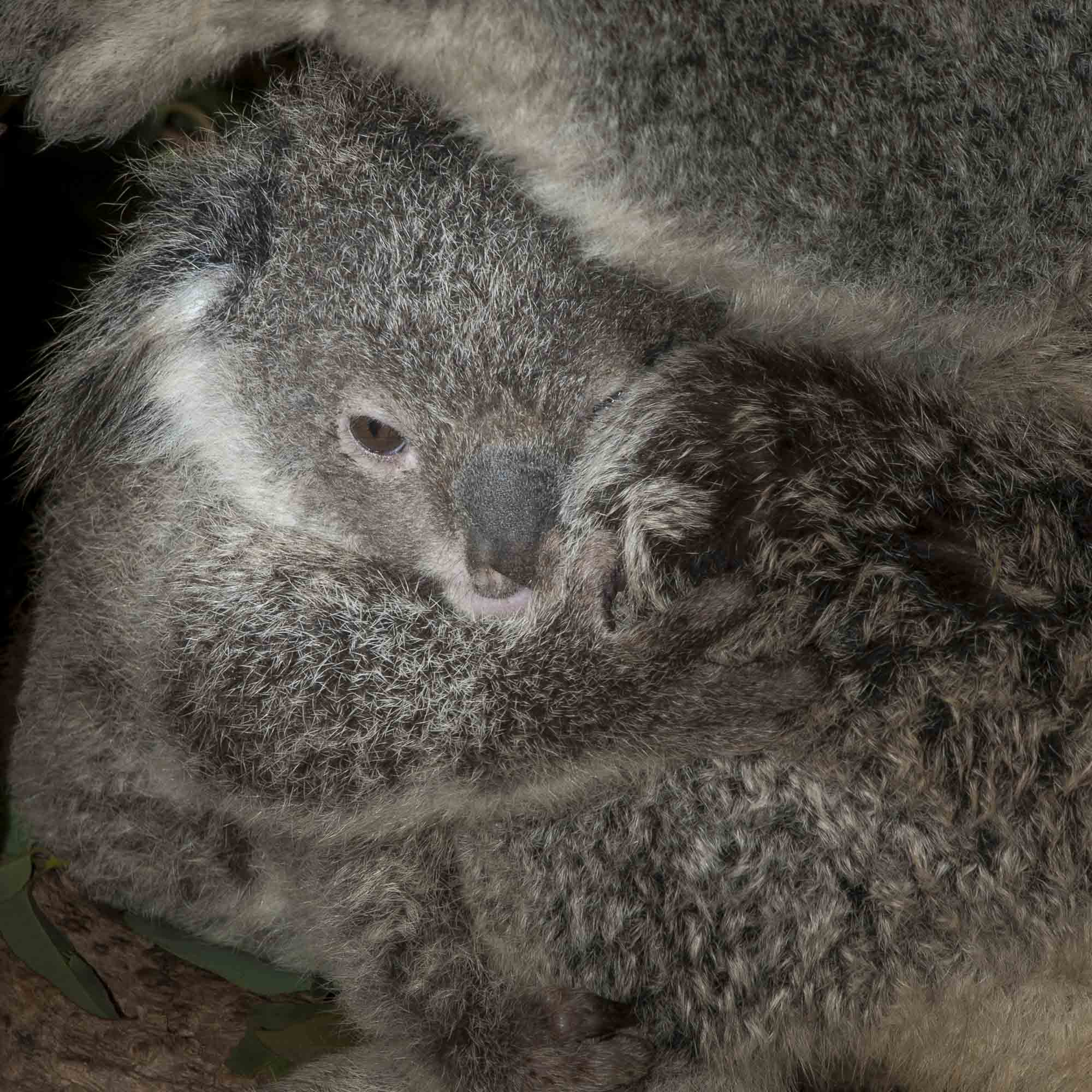
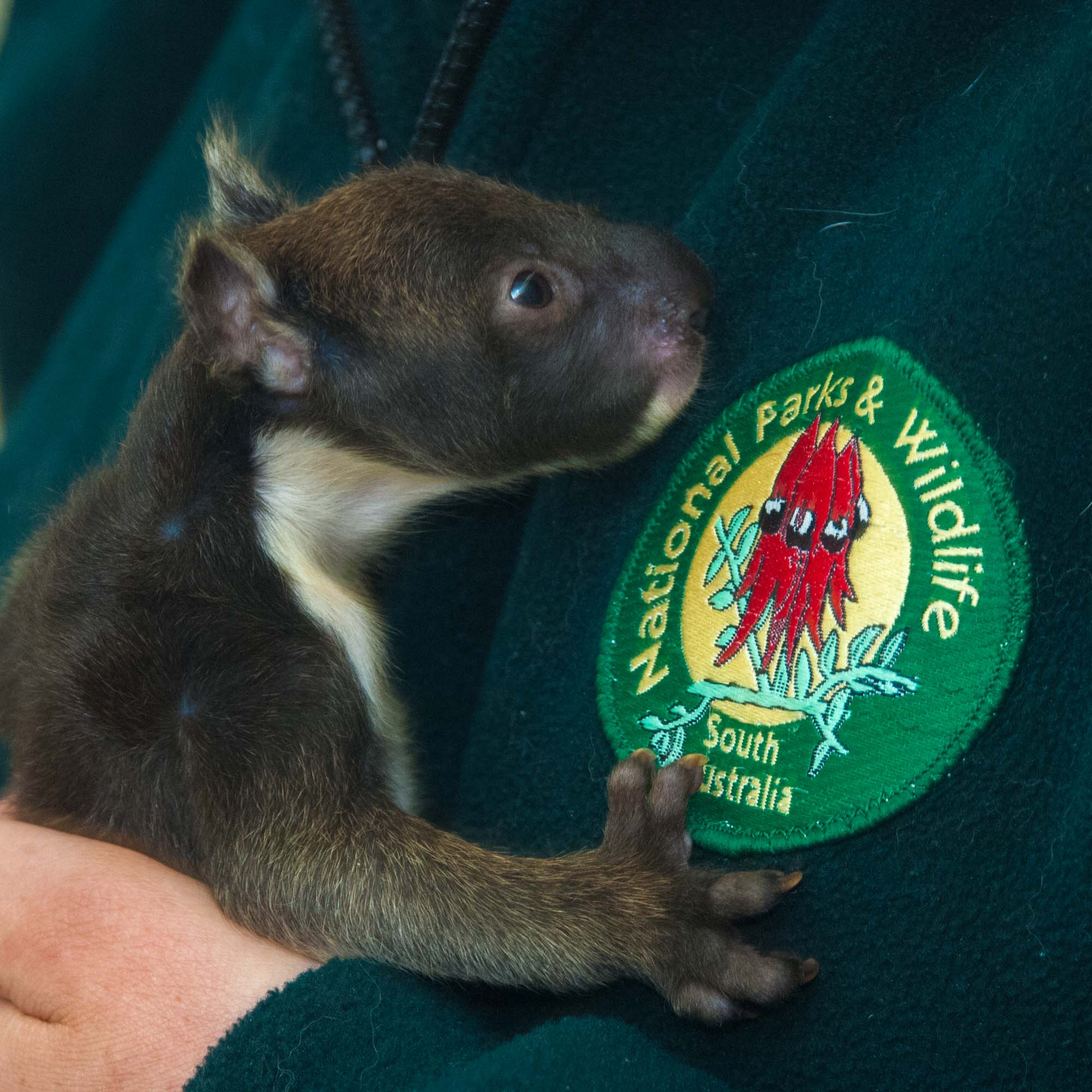
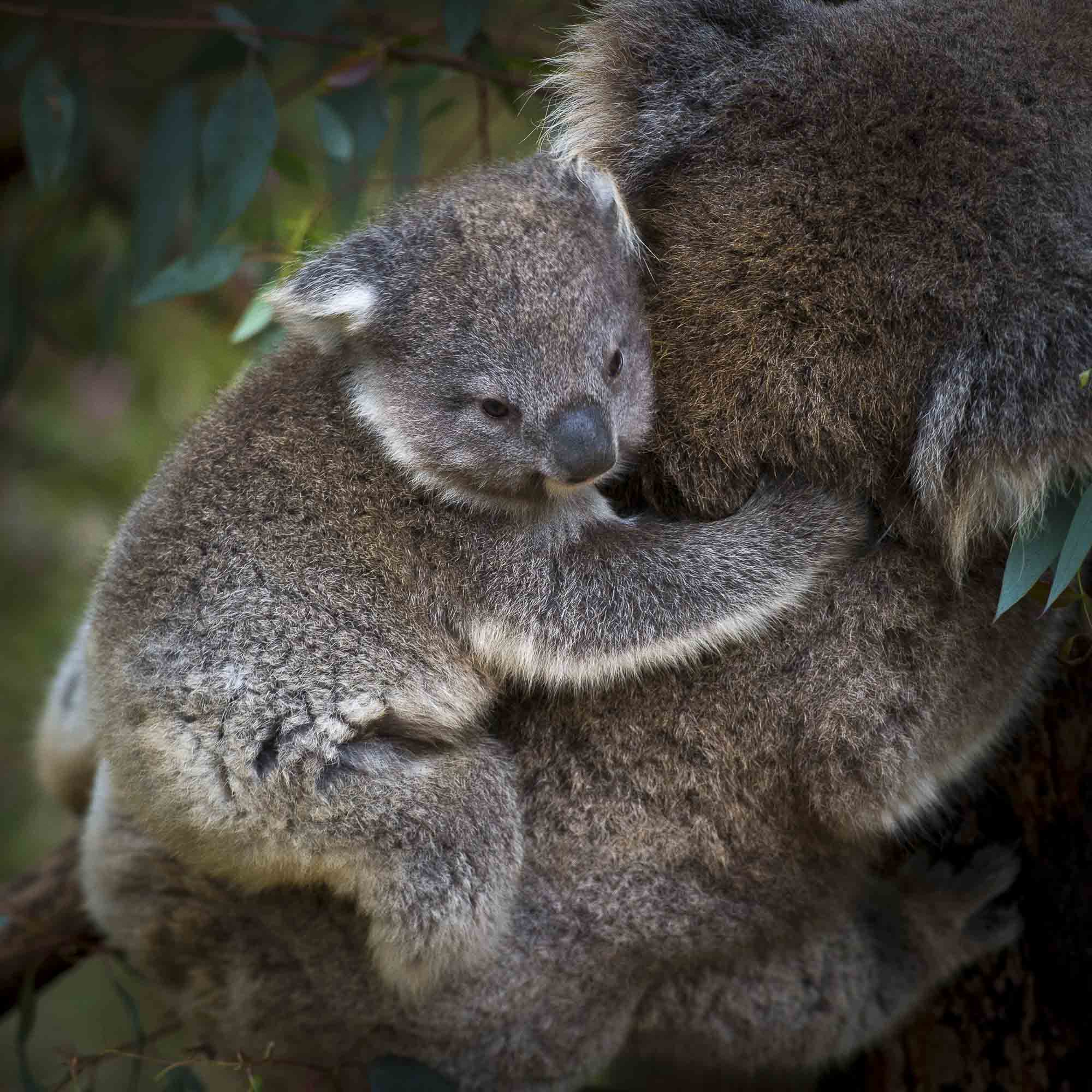
A single joey, or very rarely twins, is born after 35 days gestation and crawls from the cloaca to the pouch, attaching to one of its mothers two nipples. Having only a single embryonic joey means that the mother has low reproductive demands, important with her low-energy diet. However, she may still have to increase her food intake by 27% to account for the energy required to produce milk. The joey makes it debut appearance, poking its head out of the pouch, in late winter at 5 or 6 months of age. When too big for the pouch, it will take to its mother’s back until it weighs about 2 kg and can dine solely on gum leaves.

Threats to koalas
Deforestation, agriculture and development, and increasing human population growth have marginalised this once widespread mammal. Two of their greatest threats are death by car collison and attacks by dogs, and in some parts, housing covenants prohibit dog ownership to prevent attacks. Koala corridors joining sections of fragmented bushland are also important for allowing independent subadults to disperse from the natal range. Koalas are also at risk of infection with Chlamydia, a sexually transmitted disease that can cause blindness and female infertility.

Finding Koalas
Koalas can be beguilingly difficult to spot in the treetops as their muted colouring and often spotty bottoms camouflage well with the dappled sunlight filtering through the trees.They very often resemble little more than a bulbous tree trunk when resting by day. One of the best identifiers is to examine tree trunks for short parallel scratches or well-worn shiny patches and to search for very dry, pellet-like cylindrical faeces at the base of a tree. While Koalas are rarely seen on the ground by day, it is not uncommon for them to descend from the treetops by night to move several hundred metres to another favoured food tree and they may be more easily spotted at dusk or at night. Bellows, wails, screams and snore-like grunts can also alert a mammal watcher to their presence.
Koala gallery – click and scroll