
Australian Coasts
‘Consider every process involved in
producing and navigating your artistic
vision as an expression
of the essence of who you are.’
Steve Parish
Australia is one of the most urbanised nations in the world, with an oft-quoted figure of 85% of the population living within 50km of the coast. Its coastline is 25,760 kilometres, or a little over 16,000 miles, long. In terms of the geological and ecological diversity – the sources for artistic inspiration – this vast coastline has incredible variety. Mangrove-lined estuaries, rocky headlines, limestone cliffs, pure white sandy beaches, extensive mudflats, and the list goes on. The artistic potential is also a challenge and, in the main, it is the time of day, weather and access that are the primary determining factors that drive creative outcomes.
Perhaps more than other ecosystems seascapes can be evocative to both engage with both as an artist and a viewer. To feel sand between your toes and wind in your hair; to smell the salty air and feel it sprayed on hot, bare skin. And the sounds as waves crash, sizzle and hum as you walk long sandy beaches, ah, sweet bliss! Coasts draw millions daily to merely because they are the best soul-food there is.

Long Walks
Sand between toes, warm breeze on bare skin,
the smell of salty air, sea-sounds that surround
while wandering tidelines with an artist’s eye.
Embraced by millions, this activity is sure to take your ‘thinking mind’
far away from the past
and future, into what is now –
the present moment where artful imaginings wait ever patiently
for that magic moment to break free.

Wild Seacoast
Leeuwin-Naturaliste National Park, south-west Western Australia.

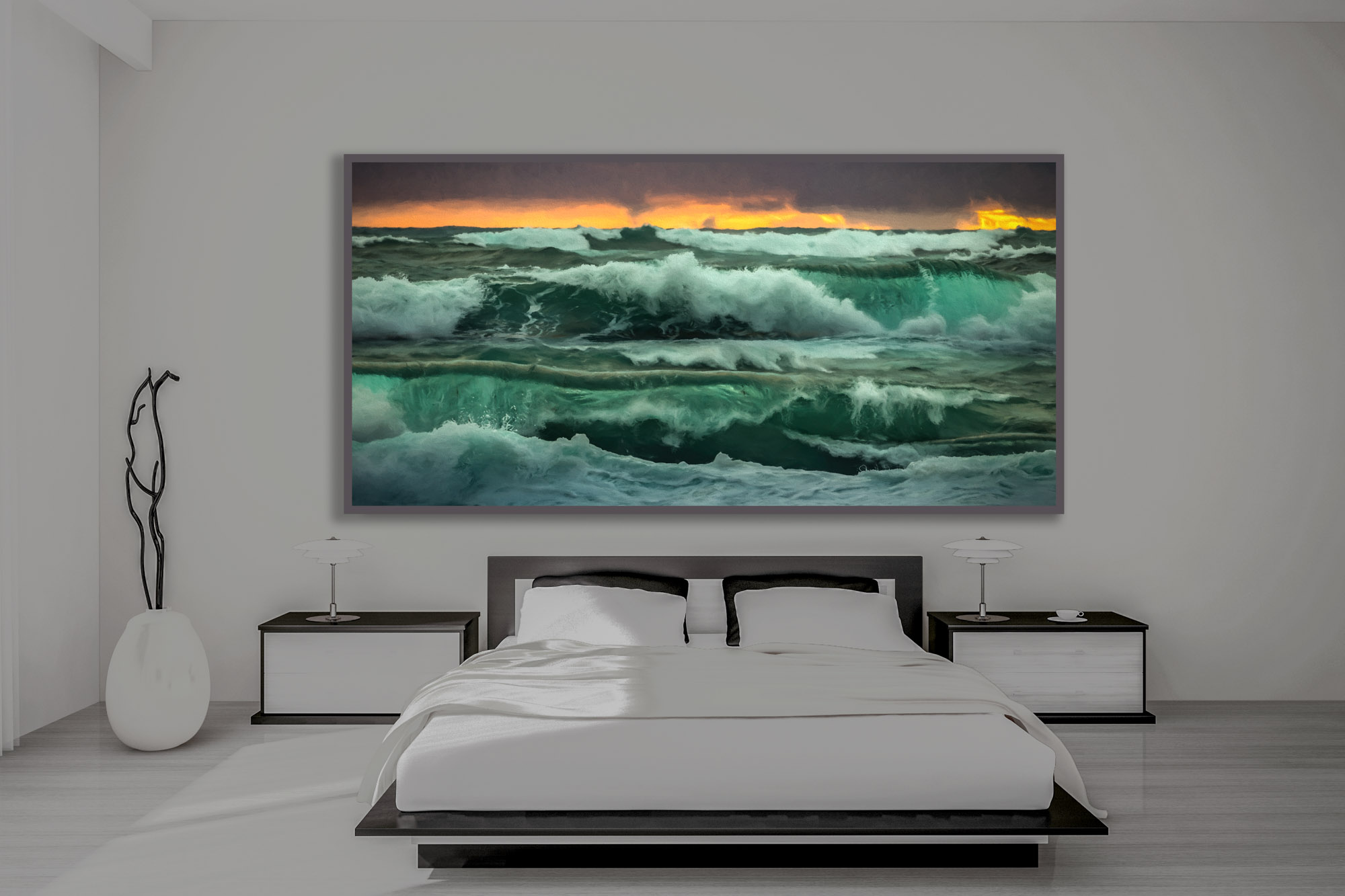
Stormy Sea
Leeuwin-Naturaliste National Park, south-west Western Australia.

Learn To Love Darkness
“Truly, it is in darkness
that one finds the light,
so when we are in sorrow,
then this light is nearest of all to us.”
Meister Eckhart.
Pounding sea coast during a major storm off Leeuwin-Naturaliste National Park, south-west Western Australia.

West Point
West Point is a western Tasmania Aboriginal Cultural Landscape that is part of Tasmania’s wind-swept western coastline. The area contains the remains of numerous hut depressions found in Aboriginal shell middens.

Worora Country
Sea eagles, Talbott Bay, home of the now world-famous horizontal waterfalls. The vast Kimberley coastline with its myriad of islands, bays, beaches and sandstone headlands is one of the most visually spectacular coastlines in Australia.

Moon Over Water
Doubtful Bay, Kimberley coast, Western Australia

Friendly Beaches
Friendly Beaches, Freycinet National Park, Tasmania

Bardi II
Where the desert meets the sea at Cape Leveque in the northernmost tip of the Dampier Peninsula in the Kimberley region of Western Australia, the traditional owners of the area are the Bardi peoples.

Ebb and flow
Spectacular boulder-strewn Bluestone Bay Freycinet National Park, Tasmania

Sunset Storm
Leeuwin-Naturaliste National Park, south-west Western Australia.

Glasshouse Rocks II
Glasshouse Rocks, Narooma, New South Wales


A Great Escape II – A Great Escape I
Above left: Creswell Bay, Bombora Reserve, Norfolk Island.
Above right: Lord Howe Island is a tiny Australian island in the Tasman Sea east of Port Macquarie. It is characterised by sandy beaches, subtropical forests and clear waters. In the south, a trail winds up soaring Mount Gower,
offering sweeping views of the blue-water bays below.


Last Rays – Windswept II
From windswept headlands and large granite outcrops to sheltered bays and beaches, William Bay, is, without doubt, one of Australia’s most picturesque seascape. William Bay National Park, Western Australia.