
Photographing Australian Trees
Whether painted with autumn colours, dusted with snow, shrouded in mist or backlit by a crimson sunset, trees are amongst the most photographed subjects in the natural world. Photographing them can be pure joy wherever you are working – in open woodlands, dense wet tropical rainforests, the mallee, or the mulga. I have long found these botanical treasures irresistible as subjects. Certain individuals have become “friends” and I love to re-visit them.
An individual tree can be a source for a wonderful photographic story. Grand old eucalypts, for example, provide homes for spiders, insects, birds, mammals, reptiles and frogs. Bark close up is a good subject for abstracts. Then there are the leaves, many of which are works of art in themselves, particularly when backlit. And the flowers! Take a close look at flowering gums – if you wait long enough you will see many species of birds, insects and, at night, mammals visiting their nectar-laden blossoms.


Choosing a View Point
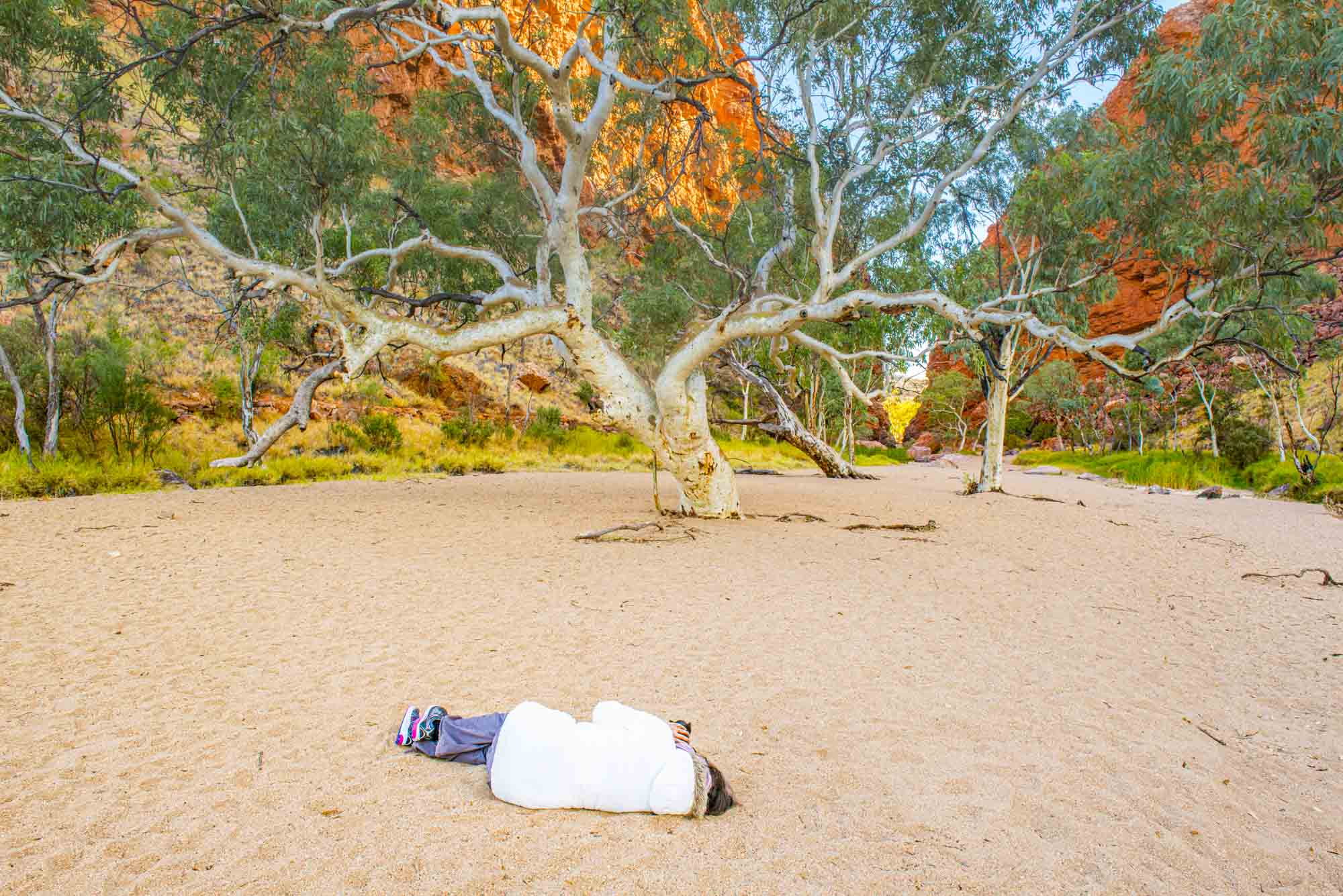
Trees vary dramatically in their appeal when viewed from different angles. They are wonderful subjects on which to hone your technique and artistic skills.
Trees, particularly those with an aesthetic structure standing in an appealing landscape, are an excellent subject when you are new to photography. They give a perfect opportunity for you to develop your skills in vital areas like light management, perspective control, balance and viewpoint. First, find a tree that you want to work with. Then, camera in hand, work your way around the tree, framing it without taking a picture. Study each viewpoint, frame it loose and tight, move around close to its trunk and see what interesting relationships might exist between the branches and the surrounding landscape. this unique snow gum is at the top of Mount Field National Park. I photographed it with a 15mm lens in 1983 and try as I may I have never been able to relocate the tree.

Making Plans
If I am in an area and the light is harsh, in other words I have arrived say in the middle of the day, I will spend some hours just driving and or walking around looking for landscapes and, if possible, trees to frame against them. then, when the light has softened and the colours become more pleasing I will return, often to just sit and watch. In a situation like this in a forest, it is important to choose overcast weather so that the light is filtered enabling detail in the understory. Notice how the light is dappled in the image above.

Shapes and Silhouettes
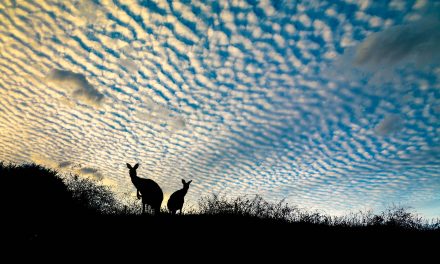
One of the most dramatic ways to accentuate shape is through the creation of silhouettes. Silhouettes are most effective when the sun is directly behind a subject. Added contrast through underexposure or enhancing contrast in post-production can also further accentuate this technique.


Moments of Reflection
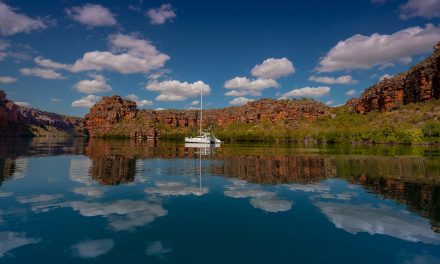
There is a certain kind of magic about reflections, regardless of the surface. Be it wet sand, a high-rise window, a salty lake or a pristine waterway, mirrored shimmering surfaces invite us to reflect mindfully on our own existence. I find trees and still water to be an irresistible combination.

A Misty Mornings
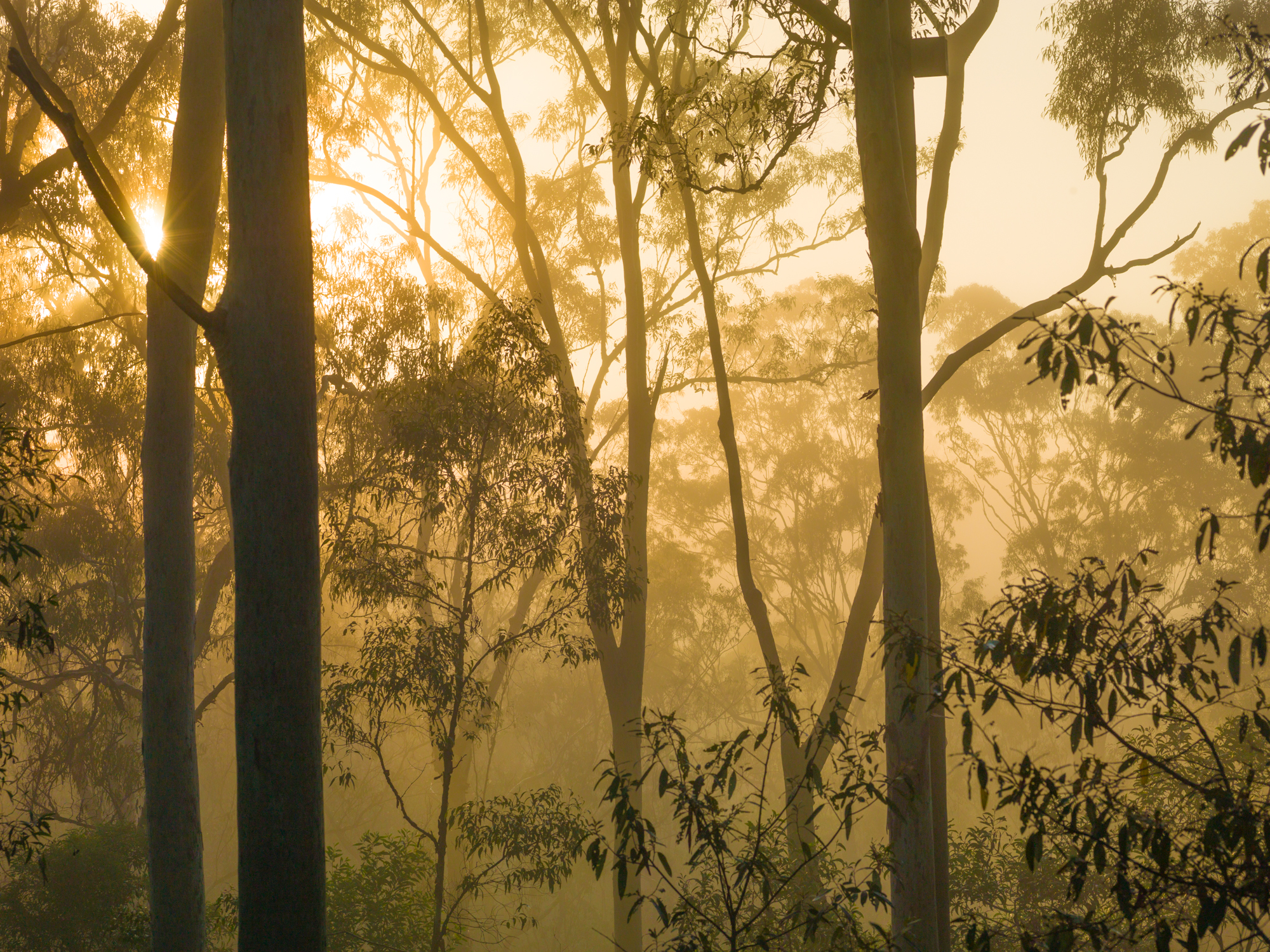
A misty morning deep inside towering mountain ash, a feature of Australia’s temperate wet forests at Yarra Ranges National Park, Victoria. Misty morning can provide dramatic atmospherics for your photography

The Art of Bark
Throughout my life behind the lens, I have developed an eye for simple, visual beauty that I find I return to time and again to the textures and colours of tree bark of abstract beauty. On each occasion, I re-establish that historical connection adding new viewpoints, compositional styles and artistic techniques. This tree bark collage from woodlands and forests across Australia is supplied as a single image.
The textures, colours and shapes of peeling bark have long been a favourite of mine. Of course, we have the fruits and the flowers, the leaves and the animals that use the trees as their homes, on and on and on we go trees are a never-ending adventure for a photographer.
Throughout my life behind the lens, I have developed an eye for simple, visual beauty that I find I return to time and again to the textures and colours of tree bark of abstract beauty. On each occasion, I re-establish that historical connection adding new viewpoints, compositional styles and artistic techniques. This tree bark collage from woodlands and forests across Australia is supplied as a single image.

Photo Tips and Techniques
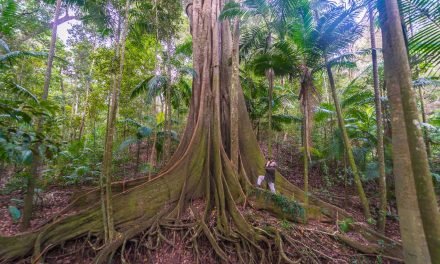
- A DSLR or mirrorless camera is excellent for tree photography. Ideal lenses are 20 mm and 35 mm, or a short zoom. I like to use my 16-mm fisheye lens (see bottom right). In this image, I have not attempted to correct distortion. Any lens can be used to photograph trees, and determining focal length depends entirely on the perspective you seek.
- Apart from being the centre of interest, trees provide a vital element of contrast in what may otherwise be a bland landscape.
- A camera’s built-in metering system can give you a misleadingly bright exposure when it is pointed towards a bright sky, so it is important to take readings with a spot or centrally weighted meter, meanwhile deciding whether the tree’s trunk is the primary focus. For example, if you want a tree in silhouette against a setting sun, the meter reading should be taken on the sky.
- Trees, particularly when they are isolated against a clear unbroken horizon, make a beautiful key element for a sunset shot. While you drive, watch for solitary trees. Once you have found a suitable subject, study it carefully. Take your time – it will not go away. When the light is right, choose your moment.
- If you are shooting a silhouette or a close up of bark, take a shot of the overall tree too, especially the leaves and any flowers you can reach. This will help identify the floral species at a later date.
- If you plan to take an extended walk in a national park, always pack for a full day’s outing, even if you’re only planning a half-day. You never know what delights may be encountered, and half-days have a habit of turning into full days.
- Check online to see whether there are significant tree species or specimens in the areas you’re visiting. Some species are endemic to a certain region and it’s good to know which before you arrive. For example, the desert oak and the bloodwood are icons of the red centre in Uluru–Kata Tjuta National Park.
- Trees make a great natural frame for landscape photographs (see bottom left).
- Misty weather can add a pensive or melancholy mood to tree photos, as can dark, stormy days.
- Don’t forget to examine bark textures and the leaf litter at your feet. Apart from being a home for a myriad of creatures, the woodland floor often turns up nuts, fruit, ferns and even “scats” – subjects for artistic or scientific images.