
Ocean of Life
‘The most beautiful experience we can have is the mysterious.
… Whoever does not know it and can no longer wonder,
no longer marvel,
is as good as dead, and his eyes are dimmed.’
Albert Einstein
I was seven years old when I was first introduced to sea life and took my first very basic picture with a toy underwater camera. Along with the camera my father had given a triangular facemask with an attached snorkel for Xmas. I was immediately besotted. I was sixteen when I took my first ‘real’ picture underwater and, from that joyous experience I became a life-long dedicated underwater photographer. By the mid-sixties, I started to publish my underwater discoveries, and in 1971 my first book, ‘Australia’s Ocean Of Life’.
Sea life has been part of both my head-spaces as a naturalist and an artist for some 57 years now. This collection represents some highlights from that life long obsession with all things underwater.
From an artistic perspective, the fishes, corals, sponges, sea stars and molluscs present more spectacular visual diversity in terms of form, colour, shape and texture than creatures from any other ecosystem.

Oceanic Icon
My favourite fish is the endemic Australian leafy seadragon, along with their close relative the weedy seadragon they belong to a family that includes seadragons, pipefish, and seahorses. Leafy Seadragons are found along the southern and western coasts of Australia. Popularly known as “leafies”, it is the marine emblem of the state of South Australia and a focus for local marine conservation.

Hammerhead Sharks
The scalloped hammerhead shark may be seen either alone, in small groups and even in big schools, numbering hundreds of individuals. These are younger the sharks which seem to prefer swimming closer to the surface, while the adults are found much deeper in the ocean. They are not considered dangerous and usually are not aggressive towards humans.

Zebra Lionfish
A graphic interpretation of the form and design of the zebra lionfish. I wanted to draw attention to its ability to all but disappear in its coral habitat through the cryptic body pattern designs benefiting the fishes behaviour as a lurking carnivore.

Southern Right Whales
These spectacular mammals migrate annually from Antarctic sea ice to the warmer waters of southern Australia to give birth to their young. This southern Right Whale mother and calf, were photographed off the southern coast of Fitzgerald River National Park, Western Australia.

A Seductive Star
Tactile arms waving in the currents as though beckoning, tempting me to approach; this is one of the ocean’s most alluring sea creatures, the feather star. There are oranges, vivid reds with white stripes, bright greens, deep blues and blacks and vivid yellows, along with a multitude of patterns and textures. Wow, what a colour panorama! Feather stars inhabit all oceans at all depths, and their beauty makes them a significant feature on any underwater tropical and temperate, shallow and abyssal.


Networking
Above left: Flower-like coral polyps are feeding in the ocean current and will retract into the protection of their limestone base at the slightest disturbance. It is impressive to consider the incredible process that has to lead to these tiny creatures building such massive structures as Australia’s Great Barrier Reef.
Above right: Gorgonian coral sea fans are without a doubt one of the most spectacular invertebrate colonies found beneath the sea. In Australia, they are found in both temperate and tropical oceans and can reach enormous sizes.


Australian Sea Lions
‘Flipper Surfing’ – Playful adolescent Australian Sea Lions surfing at Seal Bay while others, preparing to depart for a day’s fish watch on. Sea Bay Conservation Park, Kangaroo Island, South Australia
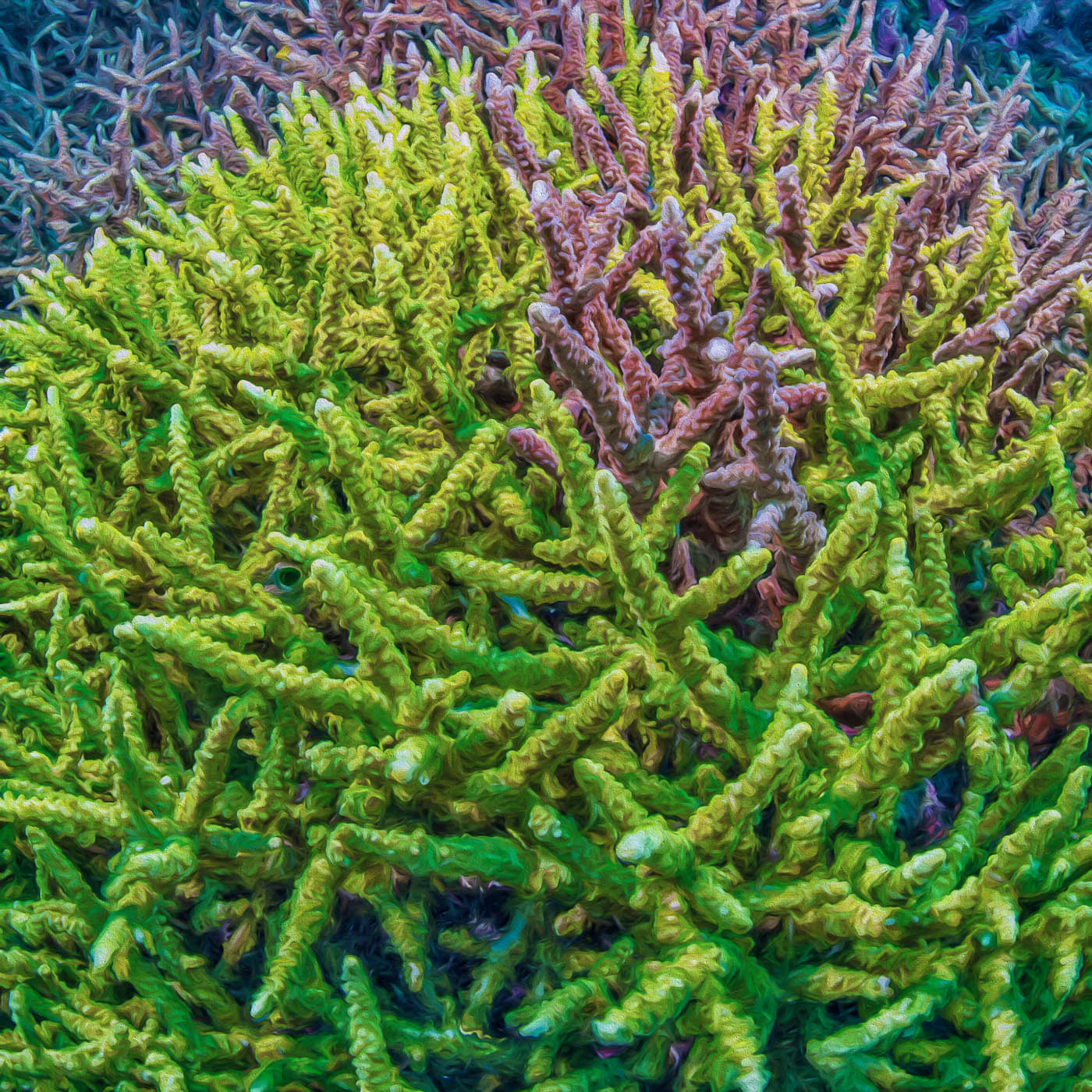
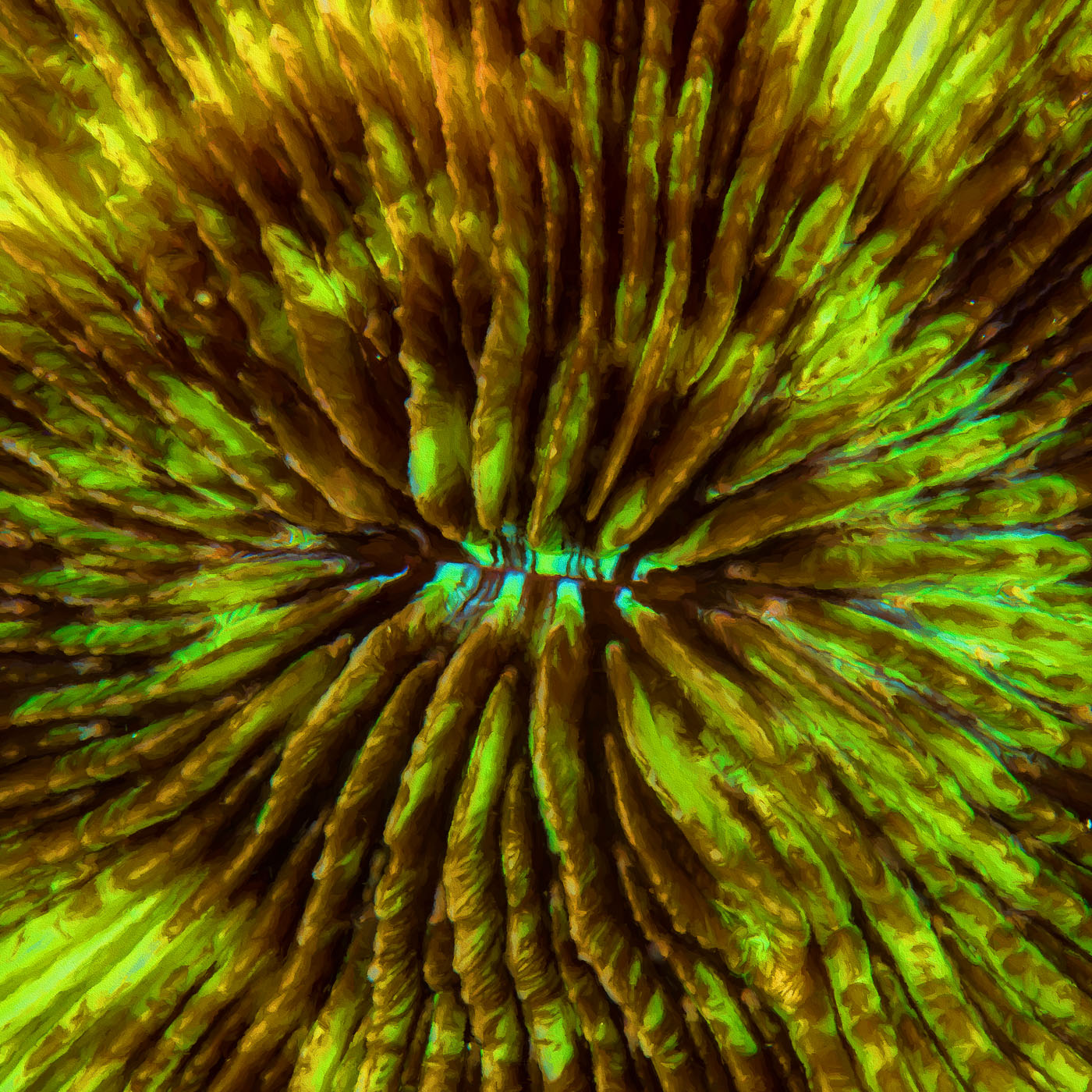
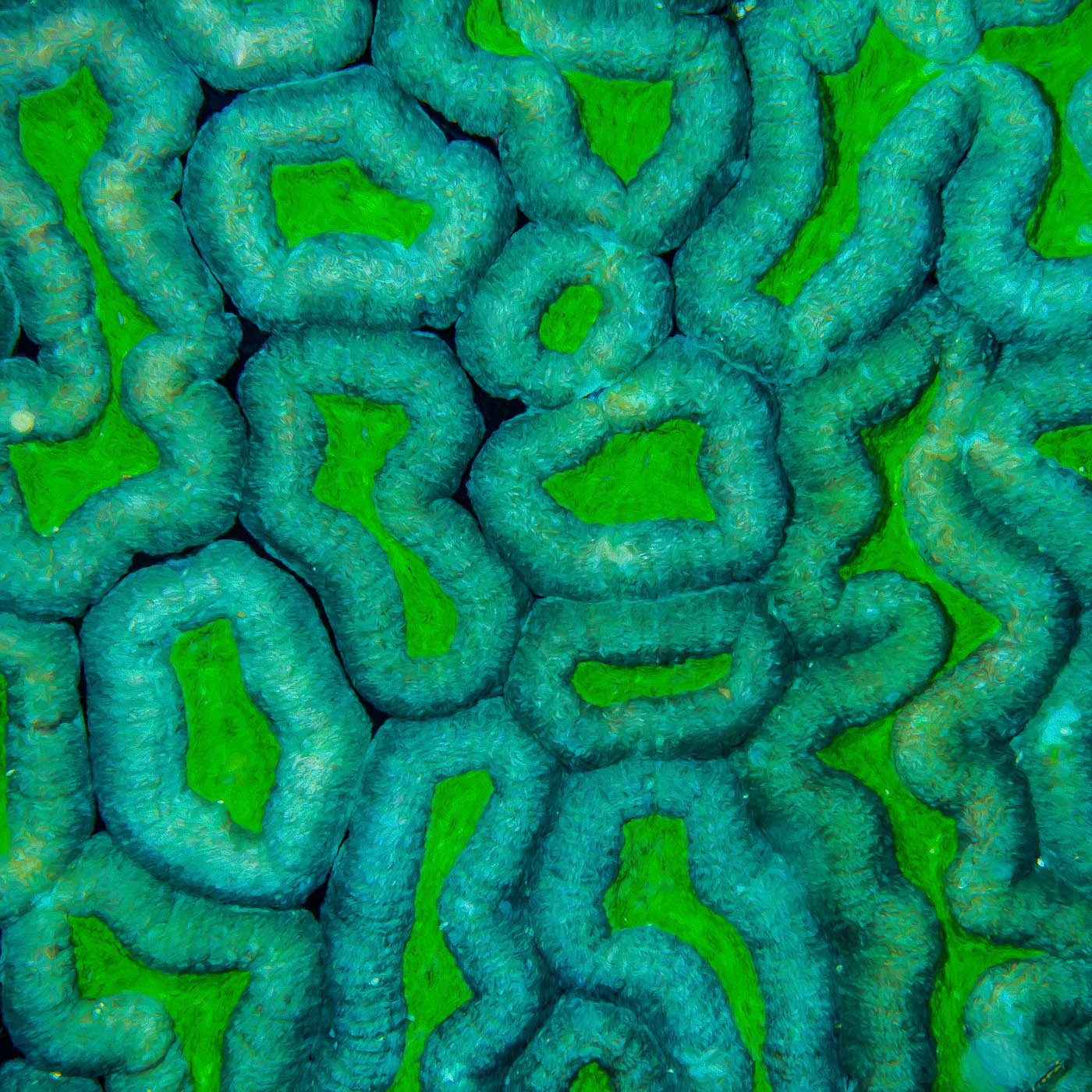
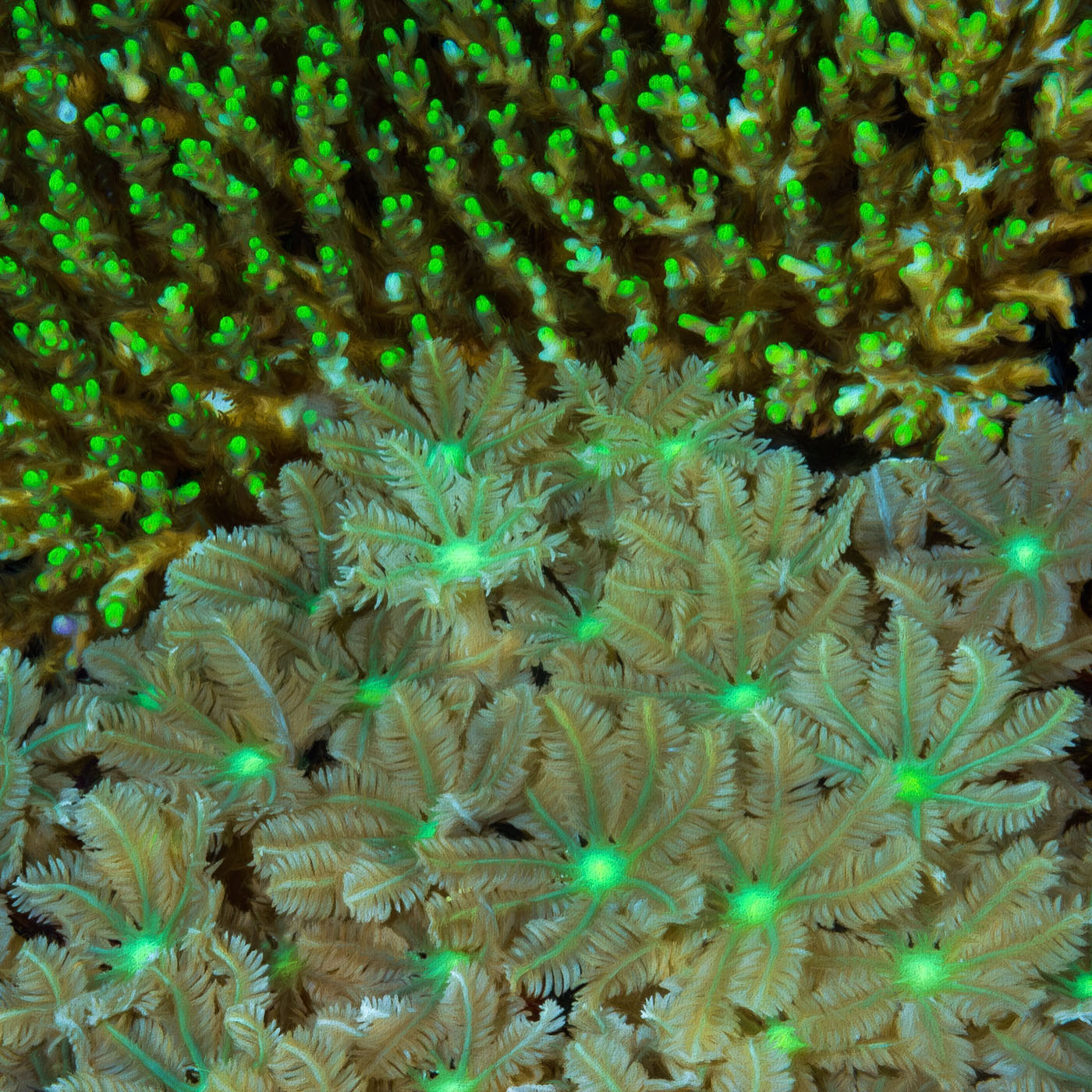
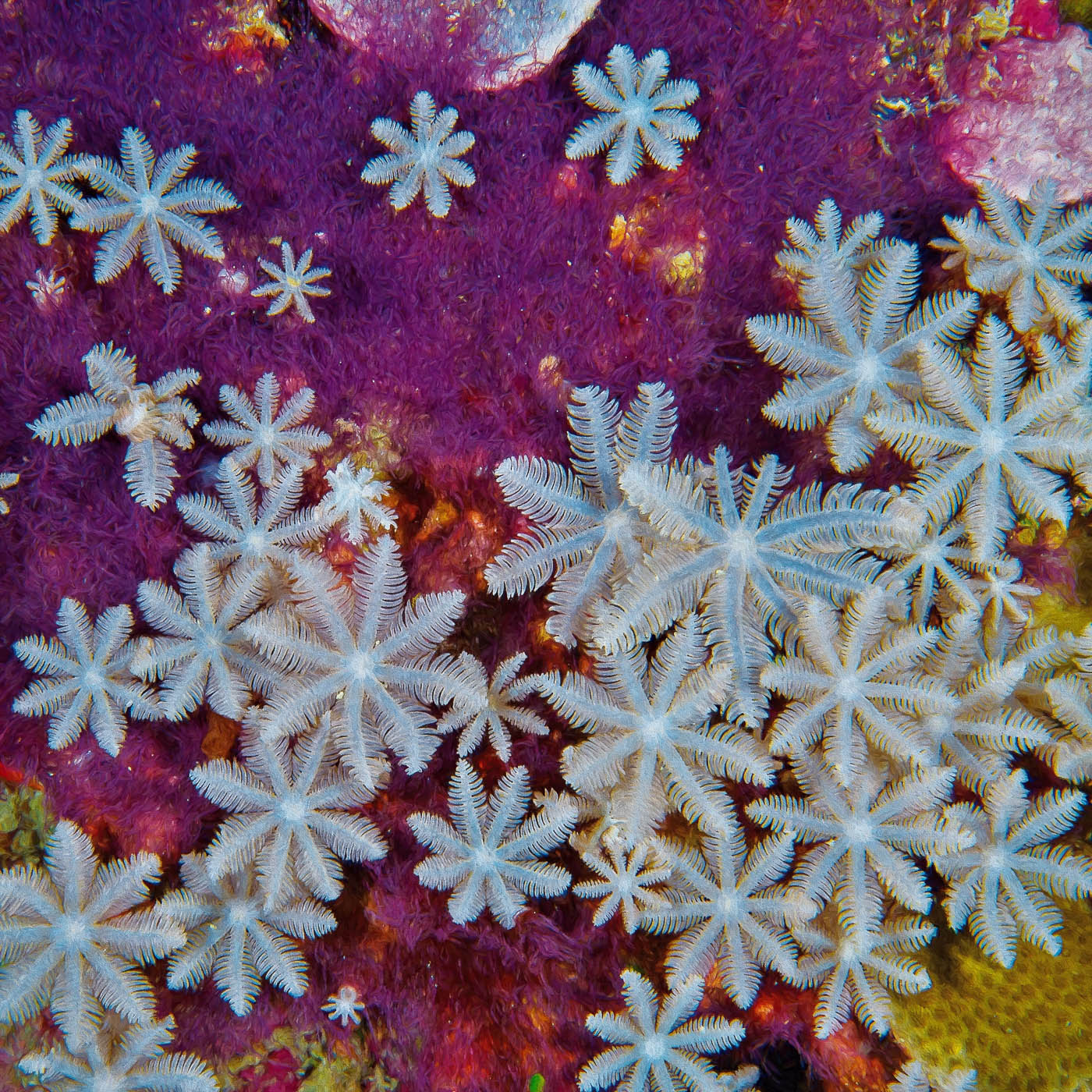
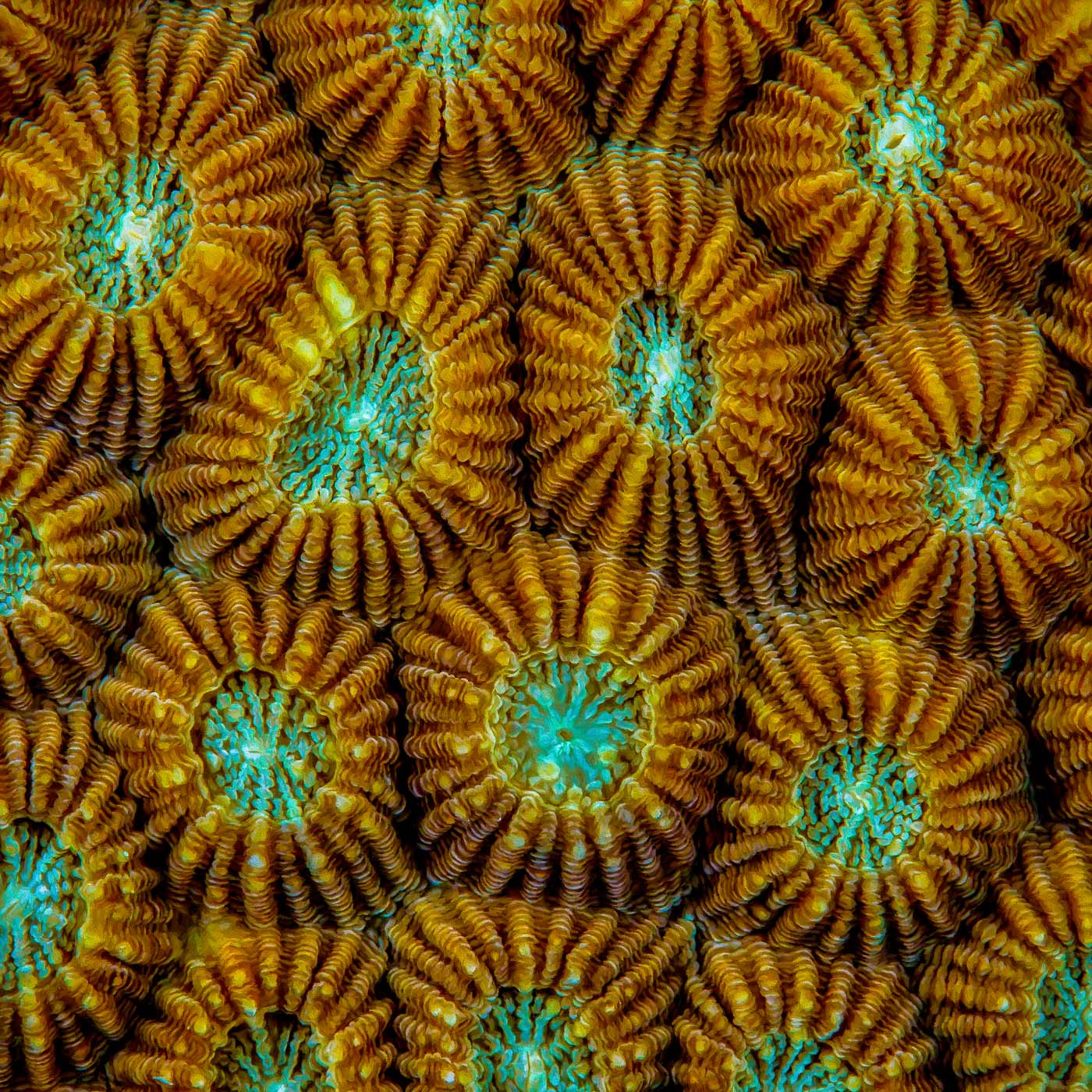
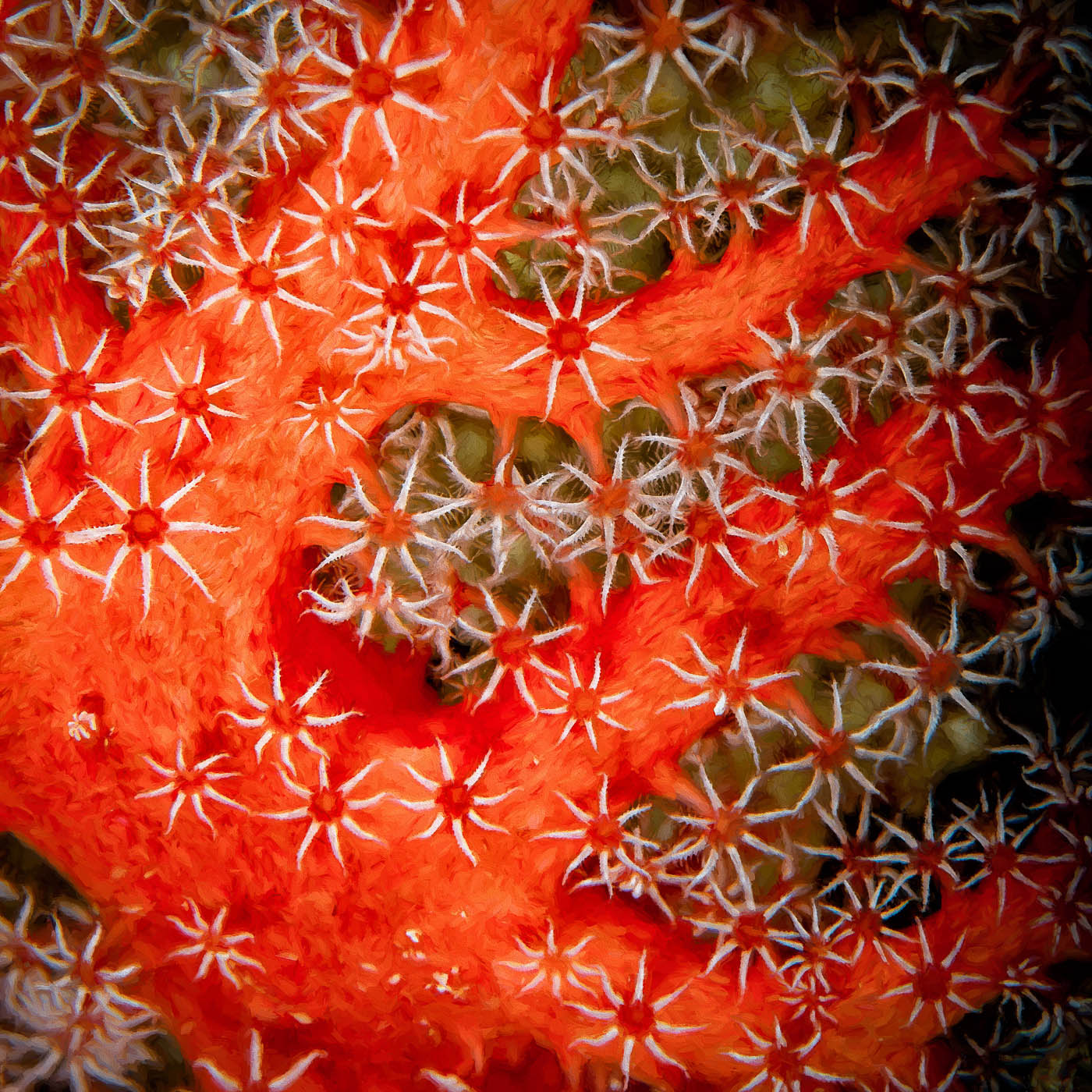
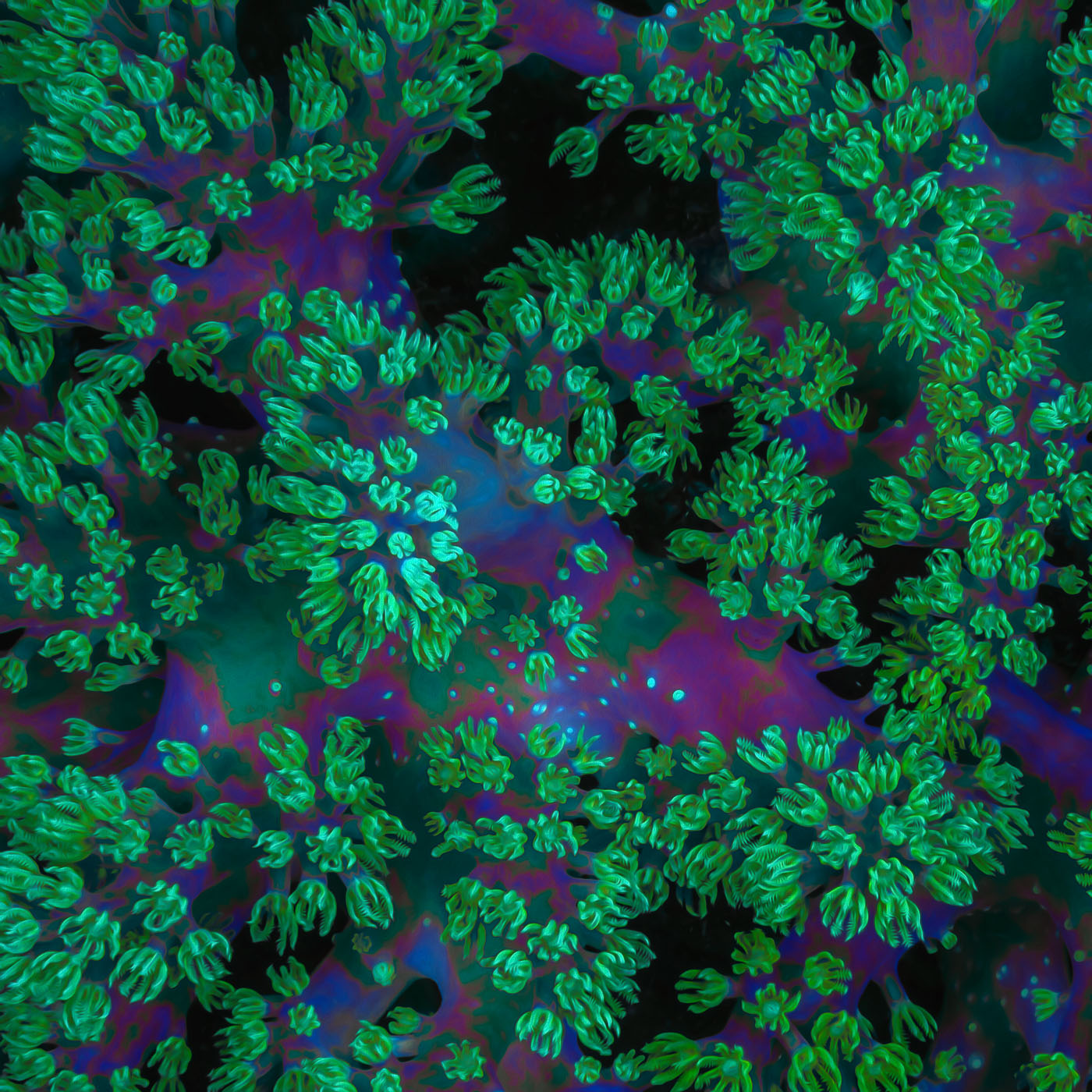
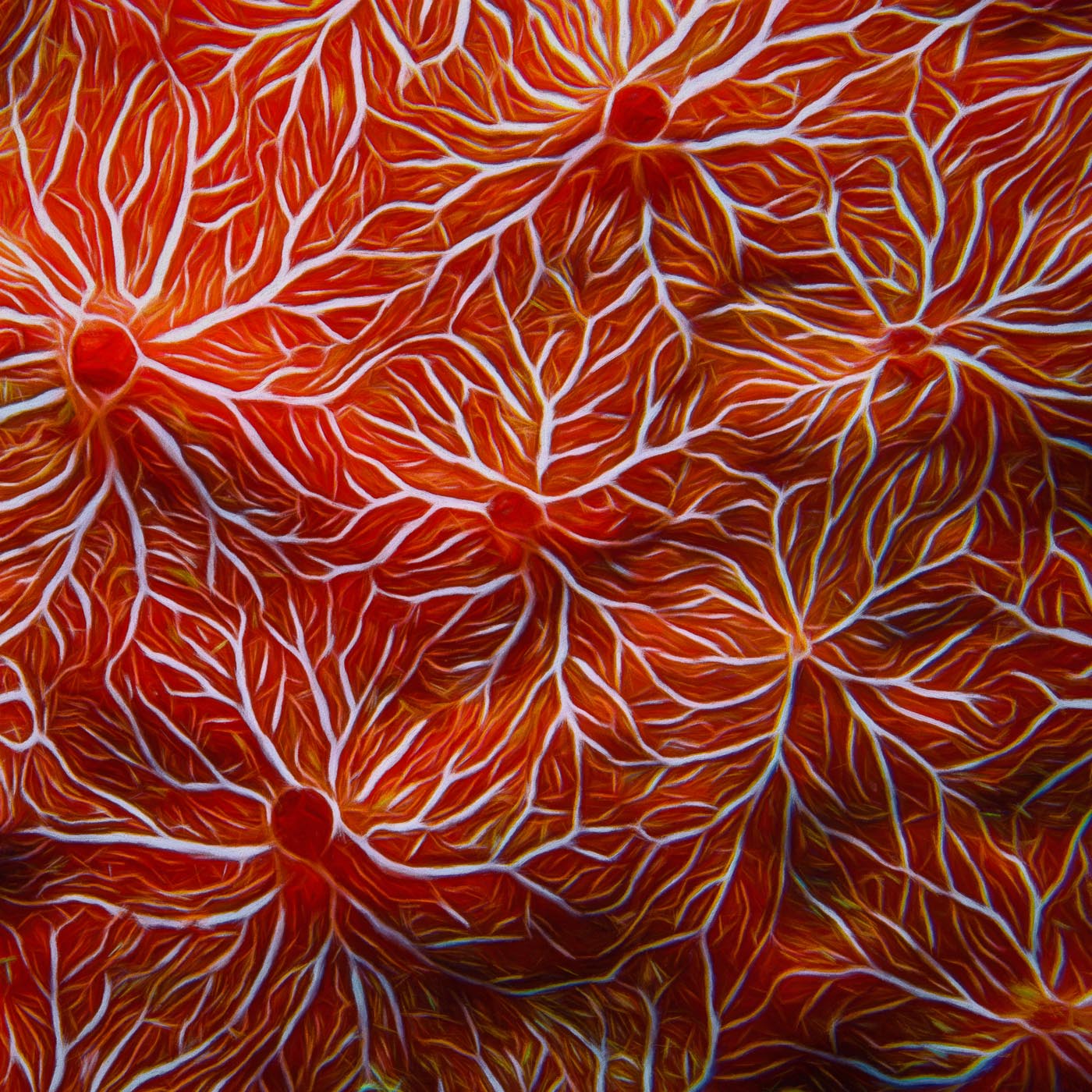
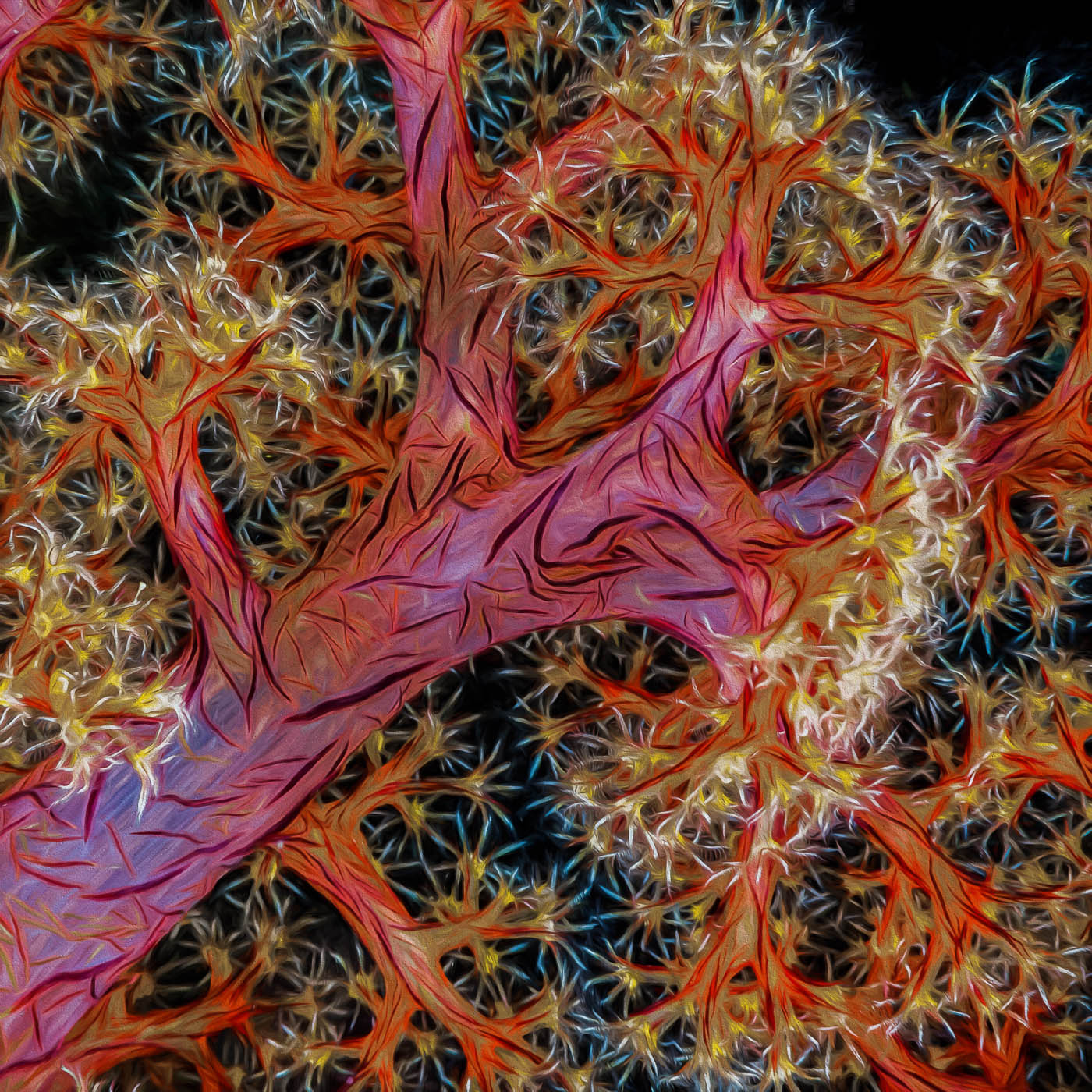

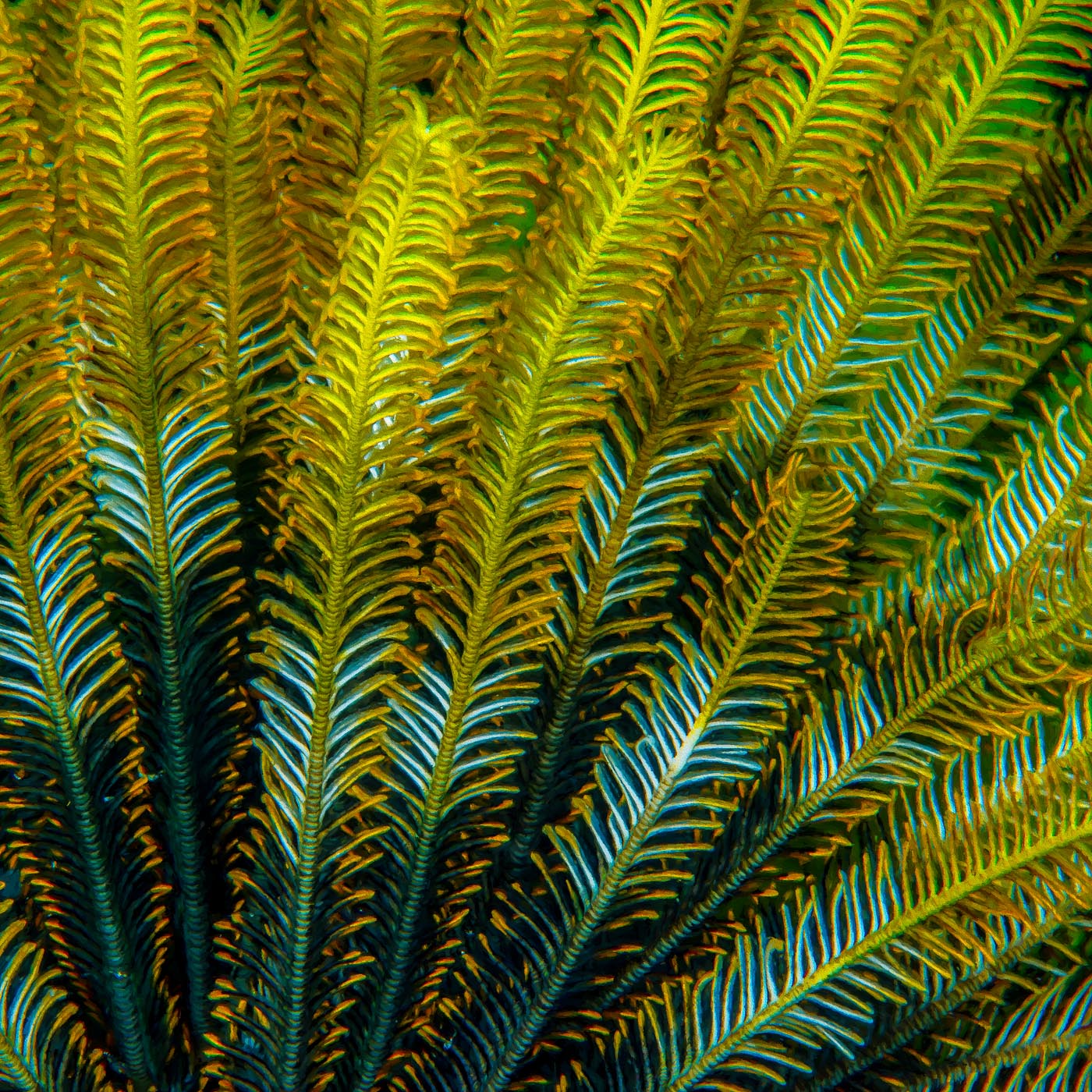

Coral Reef Squares
From an artistic perspective, hard and soft corals present form, colour, shape and texture in such diversity one would be hard pressed to find another animal group to match. These close-up studies from the Coral Sea are merely a small example of the marine invertebrate fauna found beneath our seas. As prints, especially as borderless panels, they make a wonderful addition to any space.