Creative Life:
Lindy Warrell’s Word Journey
It Started Like This
Steve Parish asked me to talk about how words and nature connect in my creative life, but I am shy in the shadow of his body of work, finding it difficult to know where to start. I am an anthropologist, poet, blogger, and novelist, fascinated by humans, their cultures and lives in cityscapes and landscapes that become… Oh! That’s right, settings. The moment I said ‘settings’, I had my theme.
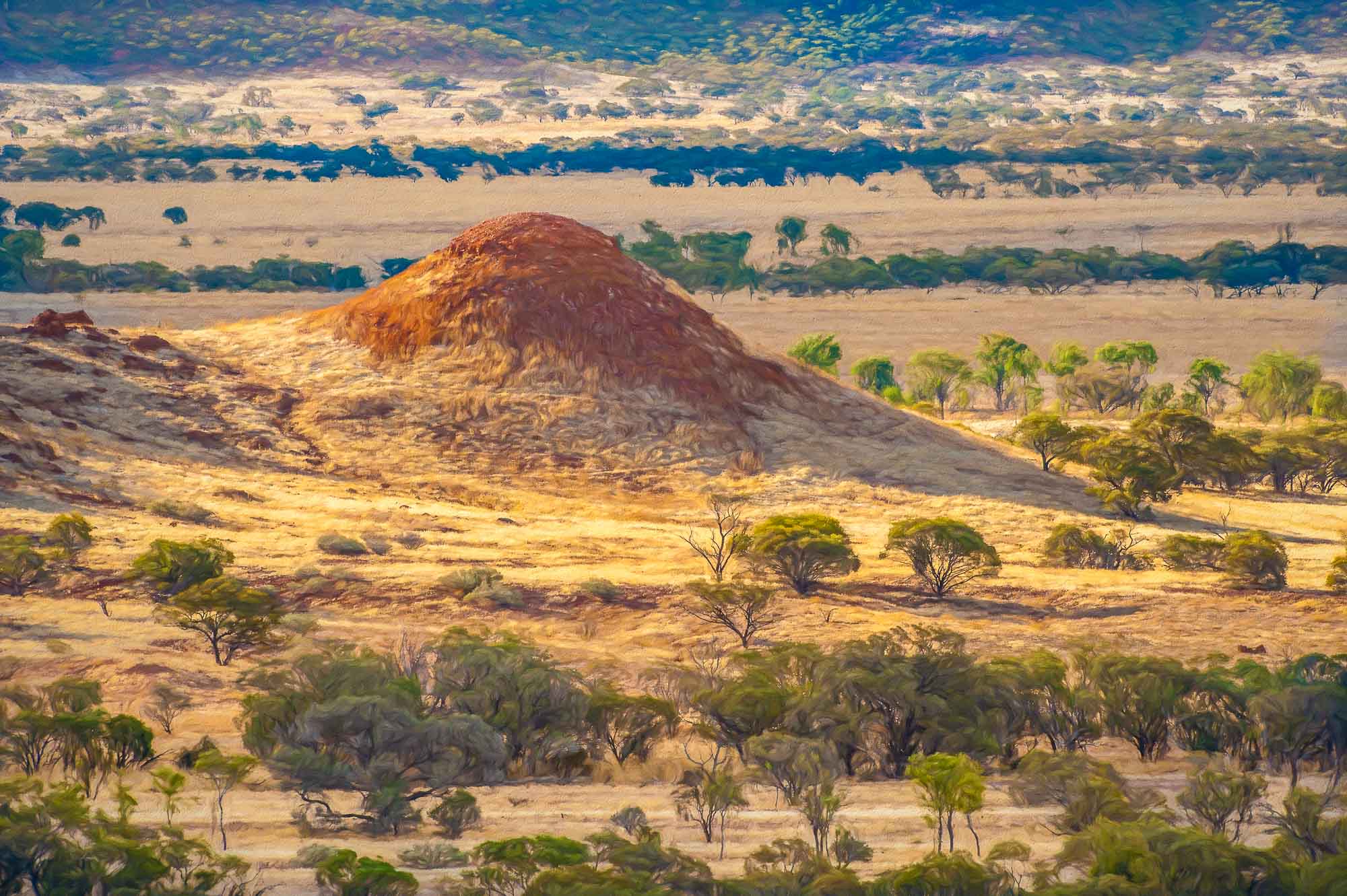
Steve’s photography brings tears to my eyes. I am a woman who cries more often in her old age, but what Steve Parish gives me pictorially is my country: the land I love, its oceans, stones, cliffs and undulations, the tropical far north, deserts, trees and grasses, waterways, flora, fauna — and mystique. This is my context, my primary setting.
My childhood taste for this beautiful land came from Mae Gibbs, who introduced me to nature in Snuggle Pot and Cuddle Pie while terrifying me with wicked banksia men — nature and culture in one delightful word package. Mary Grant Bruce’s Billabong series for pre-adolescent girls had me yearning for the outback.
In high school, I was a member of The Bird Lover’s Guild of Australia and desperately wanted to become a botanist. However, we moved from New South Wales, where it was on the curriculum, to Victoria, where it wasn’t, so I lost that opportunity.
My enduring love of the koala comes from the toy ‘bear’ my nana gave me when we departed Australia for Japan post-WWII, where my father refurbished and managed the Marunouchi Hotel for the British Commonwealth Occupation Forces (BCOF). I loved my koala so hard that its fur fell out. It fills me with pain now to think that precious animal could be extinct before I die
The Australian landscape now finds its way into my writing as it entered my pubescent heart when adventure-cycling with a friend. We’d get excitingly lost in dry creek beds between low round hills where we got grass seeds in our socks and rested beneath fragrant blue-green droops of eucalypt leaves, imagining what life must have been like for First Nations people. Sixty-odd years later, those grass seeds found their way into this poem.
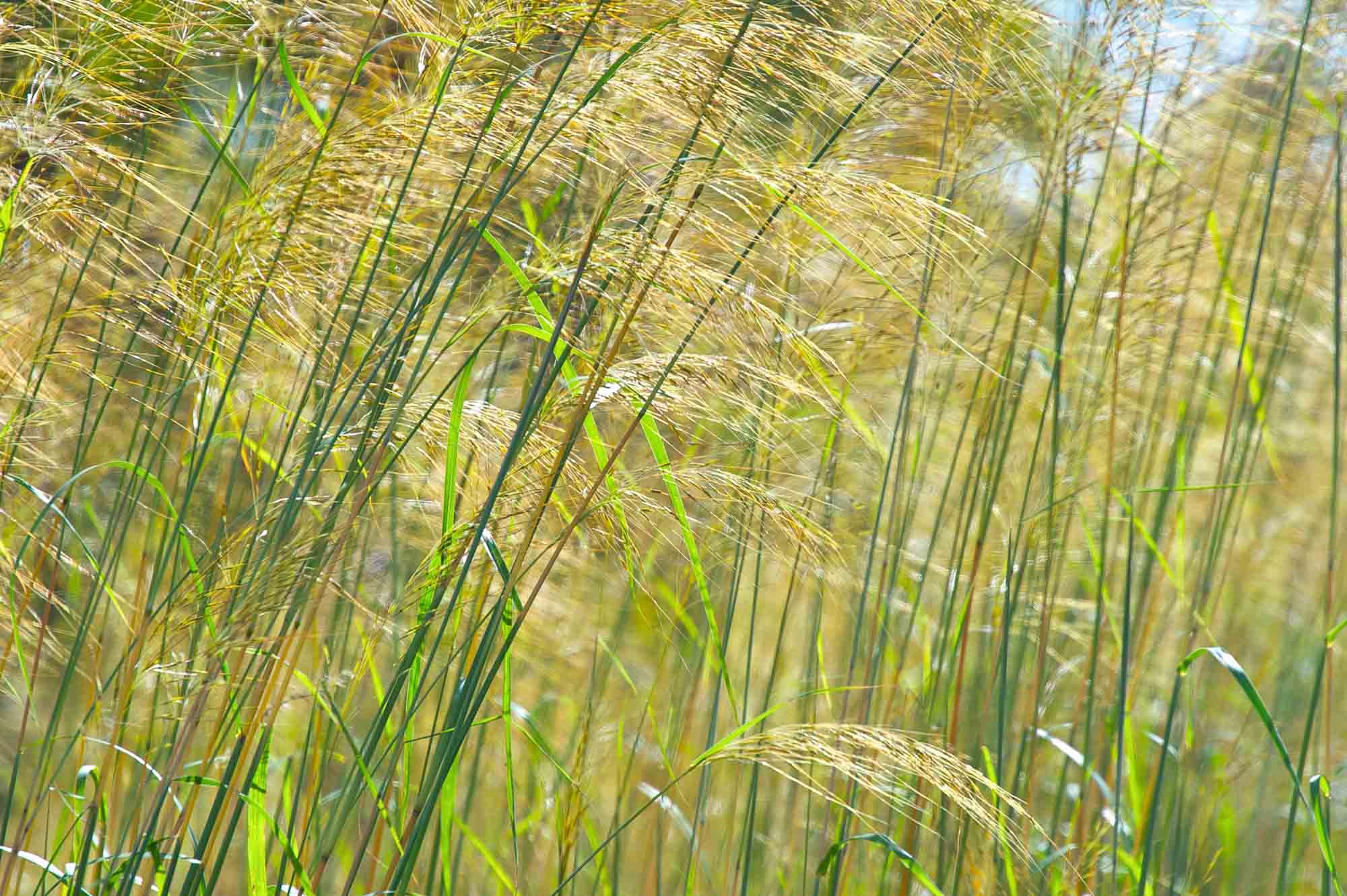
Summer Grasses Strathalbyn
Inspired by David Dridan’s oil painting of the same name.
Yellow streaks and white dots
in a frame, a large frame
to hold fields in check, fields
of dry grass, endless to a summer
horizon and heat that shimmers
up through stalks — bent, twisted,
stalks — each as fine as a golden strand
of hair, yet dense in a breeze-filled dance
across canvas. A five thousand dollar
gyration of oil-painted stalks offset by a tree,
a dead tree where two crows perch
on gnarled grey branches,
ominous but for the light
of a powder-blue sky.
To stare is to discover hidden grass seeds,
those that bury themselves deep, ever deeper
into a dog’s ear or crawl in the jumper
your nana knitted that you wear
only in places you won’t be seen.
The seeds get into shoes too, and socks,
prickly, pricklier than in the painting
which is tantalisingly benign
yet holds a story, my story of lost love
and a man who wanted to build his fortress
in such a landscape, on open grassland —
almost wasteland — trees dead or dying,
ringed by a fence of limestone rocks
piled in the irregular pattern
of invading settlers.
A Writer’s Words
When I write poetry, the natural world emerges spontaneously from my repertoire of experiences, whether actual or imagined from other words or images. In a novel, nature as a setting enters in fragments through a character’s senses. How they touch, taste, hear or smell the world enhances characterisation and creates moods for a reader.
I recently gave an Author talk at the Brighton Civic Centre in SA, promoting my novel, The Publican’s Daughter. I spoke of the mulberry tree where I dreamed among its fruit and leaves of becoming a writer as a child. An Acacia cambegei, or stinking wattle as it is colloquially known, is on the book’s cover to symbolise the dark side of life in the bush in the early 1960s for women and First Nations People.
Nature can represent or evoke many things in writing. The protagonist is a city girl who wants to find a husband but falls in love with the desert only to discover that even the desert lies. As this poem suggests, nothing is straightforward when humans mess with the landscape.
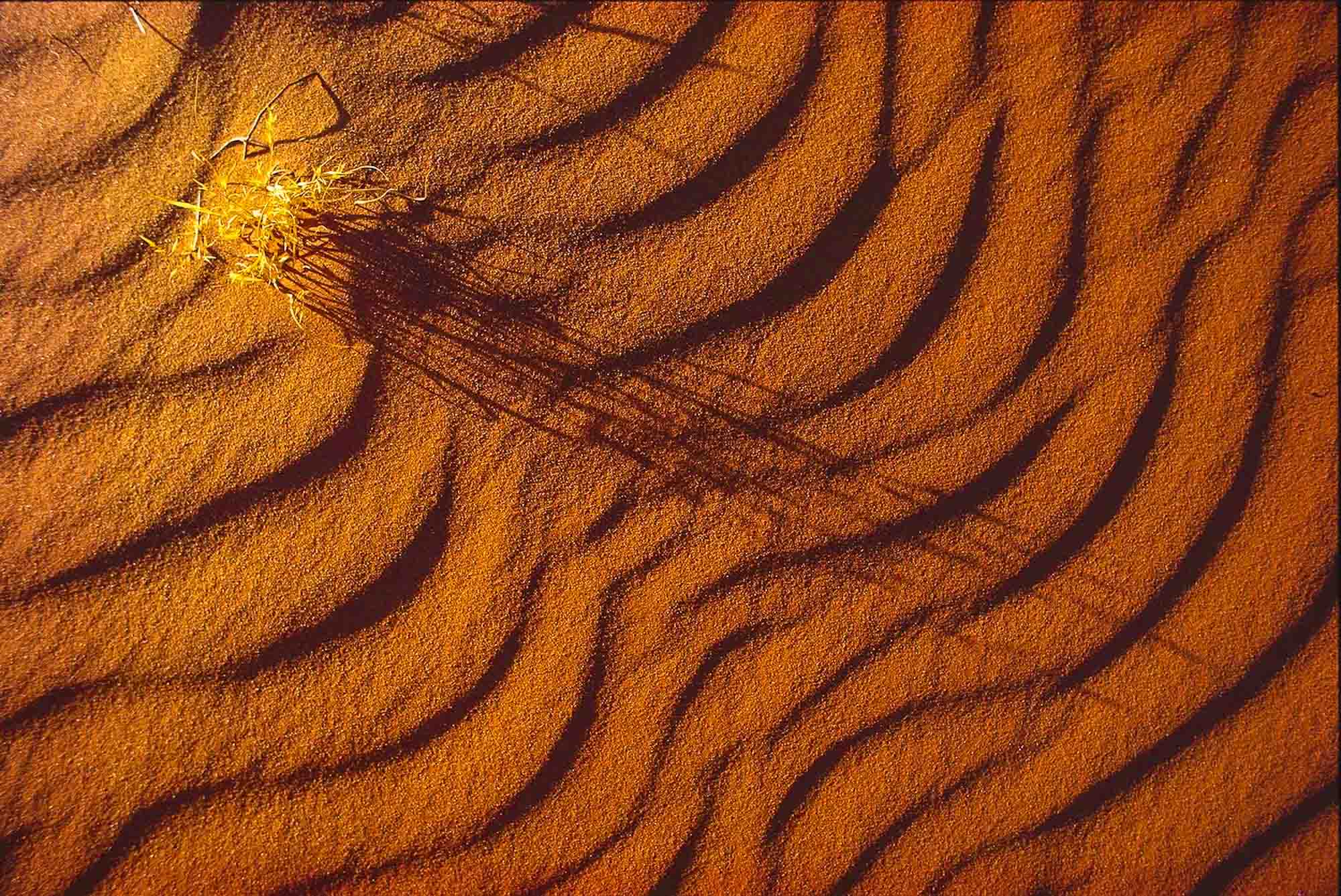
The Desert Lies
Mottled red and purple
your vast stony plains
tell ancient tales
revealed from deep
by sun, wind and time.
Your red wrinkled sandhills
expunge lizard tracks,
snake trails, traces of life
with every breeze
as though pristine.
But, under sky’s blue intensity
and scorching eye of sun
your shiny stones and shimmering sands
hide grotesque massacres, killings
and extinctions —
an innocent palimpsest.
In my novel in progress, High Rise Society, I borrow from Bill Neidjie’s remarkable words in Story About Feeling, edited by Keith Taylor (1989), where nature becomes a character I call Old Man Eucalypt.
That tree e listen to you, what you!
E got no finger, e can’t speak
But that leaf e pumping his.
Way e grow in the night while you sleeping…
You dream something
That tree and grass same thing…
E grow with your body your feeling.
When you sleep, good sleep in the night, I ask you
“Good Sleep?”
“Yes”
Well tree e same way, e worked with you.
When you feeling tree e work with you tree.
You cut I’m little bit, you got water coming out.
That’s his blood, same as your blood. So e alive.
Bill Neidjie
The story is set in high-rise public housing for the elderly in Prahran, Victoria. At 60, the protagonist Ruby drives from Darwin to Melbourne to escape a violent marriage and sleeps rough in her car until she is offered a high-rise unit. The story’s setting encompasses five council parks where characters walk their dogs, trees whisper to Ruby, and old Man Eucalypt becomes her guide and mentor.
Yes, there’s a bit of magical realism in this tale, and I thank the spirit of Bill Neidjie, also known as Kakadu Man, for inspiring that. Nature enchants. It is magic.
This poem alludes to the history of the eucalypt from colonial times to now.
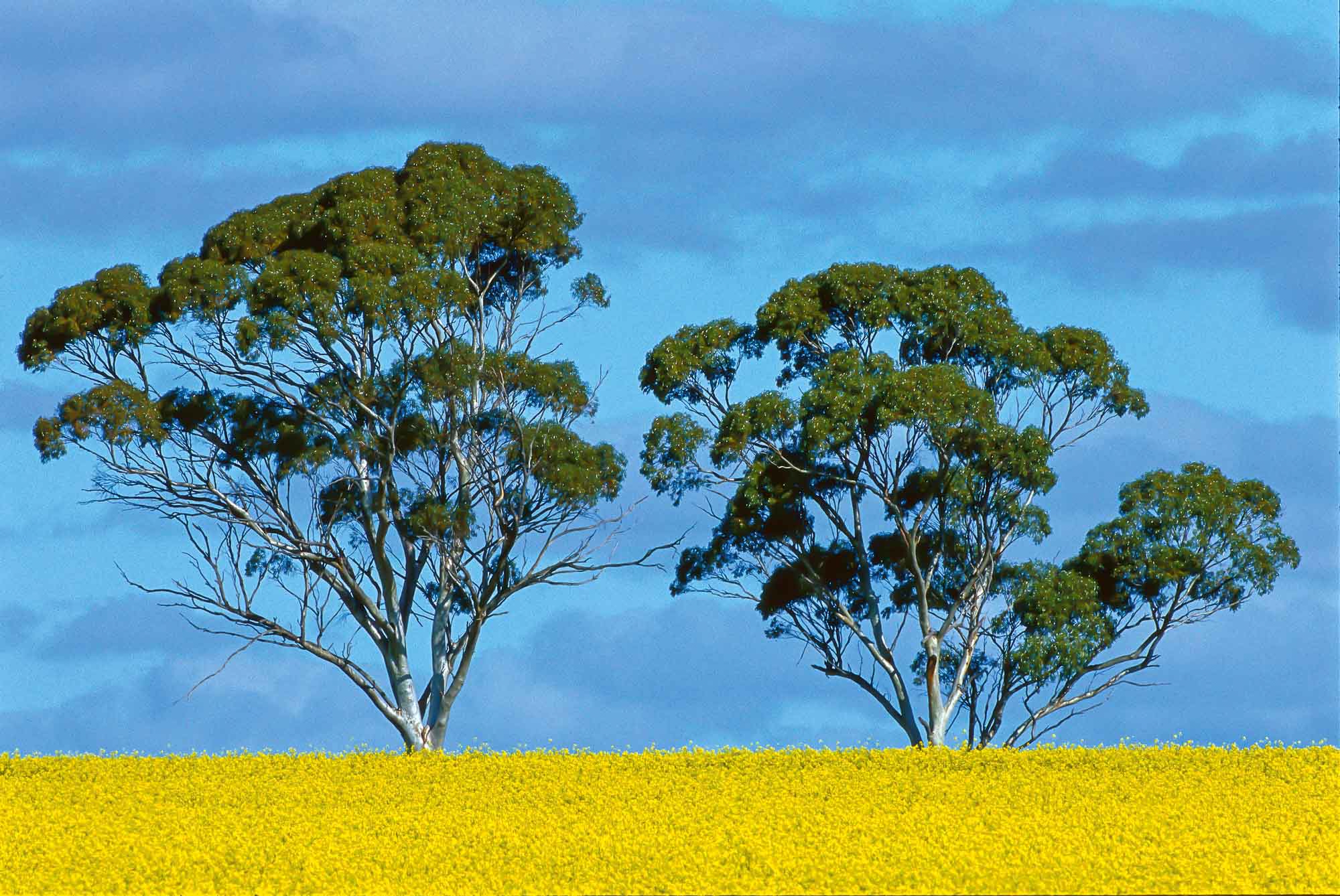
Of Eucalypts Lost
Grey-green droops of slender leaves
spread habitat across this land
for bats, ringtails, koalas
and crawly creatures until
sacrificed forests became miles of tiles
for settler roofs and roads.
Farmers came, and miners,
whose baked fields and murky yields
silenced the birds’ empyrean chorus,
starved fragile fungi, sunlight-fed
by clever, clever leaves
that turn skinny-side up
to preserve moisture for parched earth.
Alone on verges, leggy roots rage
in ripples beneath snakes of tar.
They disrupt foundations, topple monuments,
and when their branches drop in water-starved shock,
people say, Oh!
We must get rid of those trees.
As an anthropologist
In my anthropological consultancy years, I was fortunate to work with First Nations people in the Northern Territory’s Top End, the far north of South Australia, Queensland, and around Broken Hill in New South Wales. I never published this work as the stories in my reports were not mine.
However, the AIATSIS Library in Canberra added one report to its collection, Three Pointy Little Hills: The Story of Marnbi at the Pinnacles as told by the Aboriginal people of the Flinders Ranges and Far Western New South Wales (1995). I was gratified by this, knowing it meant the people whose stories I’d recorded gave their permission. Marnbi is the name of a bronzewing pigeon who travels from the Flinders Ranges in SA to Broken Hill and, as I later discovered when I worked there, Mount Isa in Queensland.
Years later, this was the context in which I wrote a bronzewing pigeon poem for The Bimblebox Art Project founded by Jill Sampson to protect a nature refuge from mining in Queensland’s Galilee Basin. The poem is not about Marnbi but speaks of the common bronzewing in natural, cultural (in the public domain) and historical terms.
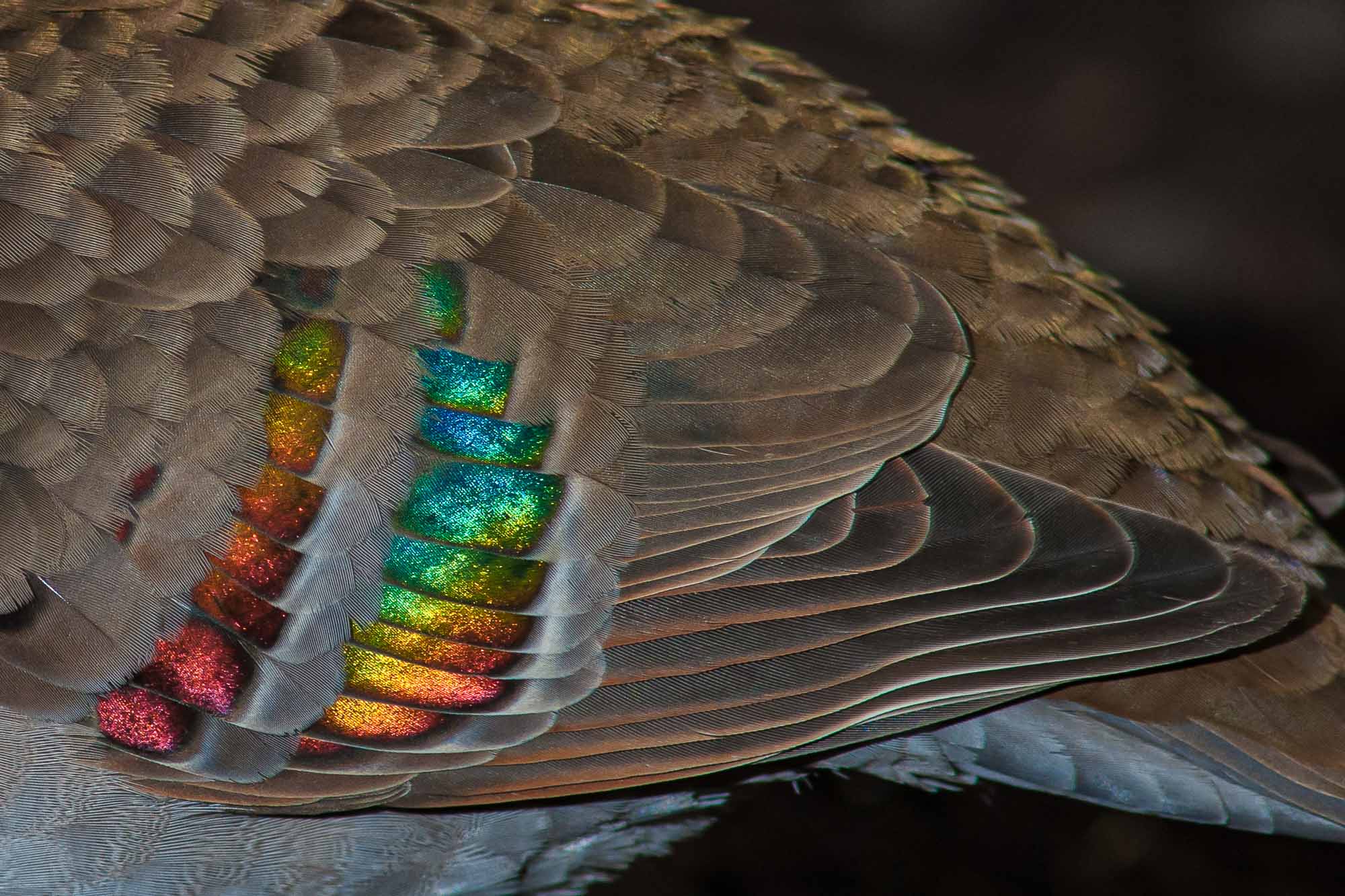
A distinctly Aussie morph
Phaps chalcoptera
Bronze-ochre-yellow blue-green
wings iridesce in the sun
like opal
soft earthy contours
leaf litter camouflage
for a wary ground feeder plump
on bright red legs
round head bobbing
white lines under sparkling eyes
vigilant.
The bronzewing takes flight
of a sudden
in a shattering wing clatter
that claps and whistles
startling the silence.
It flies low, fast and afar
to sit down with ancient peoples
at waterholes and camping places
where stories are told
of travels
of human and totemic morphs
of fights and broken wings that ooze
of blood, guts and stolen dilly bags;
a geomancy of white quartz
precious ore deposits
water and fire.
Be seduced by the coo of the courtship dance
strutting bowing
tails fanned for love
but beware the single-wing lift and growl
of this distinctly Aussie bird
whose portents are for predators
and intruders.
Working as I did for many years with First Nations people was a privilege. And one day, not long before I retired, I received this unexpected praise from a woman Elder. And not to confuse, I am the Ol’ girl in the poem.
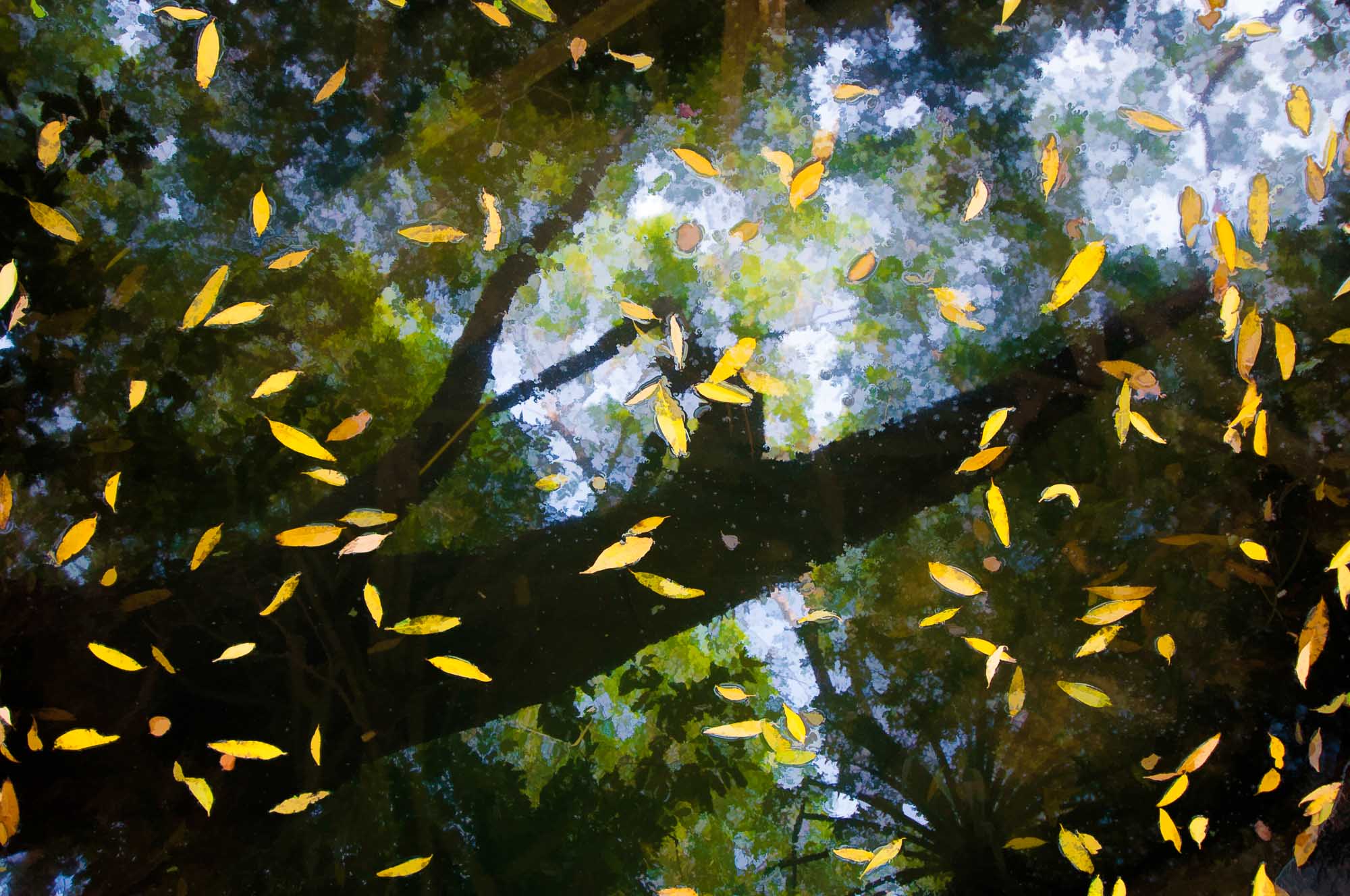
Ol' girl can drive
She sits beside me, silent. Intent.
A shock of white curls,
lined brown face,
dark eyes alive
to each furl and bend of grass
and ancient songlines
in water holes, cliffs and trees.
We drive far off-road,
no tracks, no talk. Hold tight,
the Cruiser swerves around boulders,
skirts tiny termite mounds
too sharp for tyres then
slides in the mud
of a paperbark swamp.
Back in the sun, a cacophony of green
glistens in the humid glare.
The crossing appears,
an 80-metre crocodile-swirl
of turbid water that licks at doors,
low range, low gear, slow, steady,
hearts pound, we rev
to scale the bank
straight up through slime
to a smile of applause on the other side.
A bush chorus begins
of chatter and barking dogs,
the clamour of children at play.
‘This ol’ girl can drive’, she giggles
a riff of mirth
among sizzling sausages, birdsong and croaking frogs.
Setting and Context
Last year, I contributed to Fleurieu Past & Present, an anthology of writing in Sand Writers’ and Art@Goolwa’s Speak Out series. Entitled ‘A Flicked Pebble’, my contribution represents the way my personal life — like my poems and stories as I’ve shown — is constantly, if variously, intertwined with the natural world. How could it not be?
About four years ago, I started a webpage, www.wattletales.com.au. At first, I talked in my blog about writing, and it evolved until I was writing about writing, told through aspects of my life. In other words, I got out of my head and into my heart to write a cross between vignette and memoir as I reflected on the process of engaging with place, landscape, or cityscape.
That led me to invite others to contribute stories about their creative journey, focusing on the relationship between life and creativity in keeping with the site’s theme, life — poetry — fiction, or life and any craft or art. As the guest posts show, the natural world creeps into many creative endeavours.
Awe of nature permeates most Australian souls. As a nation, we have a deep and abiding love of our landscape and a willingness to learn the map of First Nations’ country names from television and events. Working with First Nations people has forever inscribed in my mind how to see the landscape as a living, narrative whole, crisscrossed as it is from shore to shore by ancient stories called songlines. This, too, is my context and part of my social setting.
I write today on the land of the Kaurna people of the Adelaide plains and pay respect to their elders, past, present and emerging.
ACKNOWLEDGEMENTS
Excerpt from Bill Neidjie’s Story About Feeling, 1989, edited by Keith Taylor.
Poems by Lindy Warrell —
‘Summer Grasses Strathalbyn’, InDail Adelaide (online), August 15, 2018.
‘The Desert Lies’ & ‘Of Eucalypts Lost’ (forthcoming), A Curious Mix of Free Verse, Wattletales Publishing.
‘A Distinctive Aussie Morph’, Bimblebox Art Project 2016 & in ‘Ol’ Girl Can Drive’, Ginninderra Press 2018.
‘Ol’ Girl Can Drive’ in ‘Ol’ Girl Can Drive’, Ginninderra Press 2018.
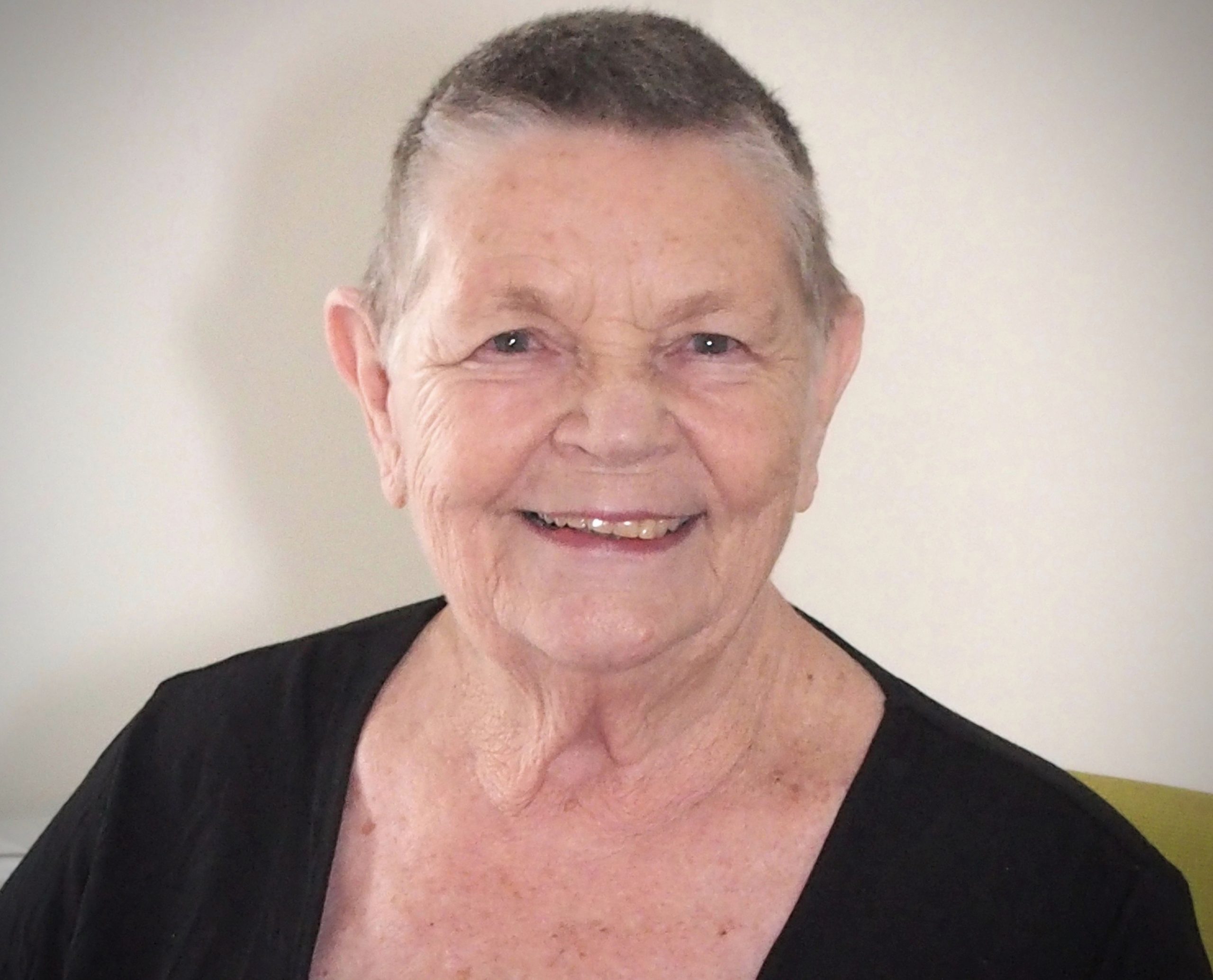
Lindy Warrell
Writer and anthropologist, Lindy Warrell lived as a child in Post-War Japan, did postgrad field research in Sri Lanka, and has worked across outback Australia with First Nations people. Lindy’s first novel, The Publican’s Daughter, was published in February 2022. Her poems appear in chapbooks, online and in literary journals, and she has a new collection entitled A Curious Mix in Free Verse coming out soon.
Lindy is active in Adelaide’s vibrant poetry scene and the founding convenor of TramsEnd Poets in Glenelg. She hosts a guest segment and blogs monthly on her Wattletales website, where you can read more about Lindy and her creative friends — writers, poets and artists of all persuasions.
Thank you Lindy for this delightful collage of memoir, poetry and images. I am lucky to know such a talented and lovely artist. Good on Steve Parish for finding you and Wattletales.
I look forward to your poetry collection ‘ A Curious Mix of Free Verse’. Jude Aquilina
Dear Jude, Thank you for taking the time to read this piece. I am quite proud to have my writing on Steve Parish’s pages. Gifts from the universe 🙂
Thank you Lindy for sharing this. It is lovely.
Oh, thank you David, I didn’t see this before today. so pleased you too the time to read 🙂 Lindy
Thank you David. So glad you read it 🙂 Lindy
Lovely interplay of your thoughts and the poems – each adds a dimension to the other. You have a wonderful gift of conveying a sense of place.
Thak you for reading, Valerie. I appreciate your words.
Thank you Steve, I’m glad you like the piece…which as I’ve said earlier, I enjoyed writing it too.
What a wonderful story! Thank you Lindy and Steve.
Alison, thank you for reading and commenting. Glad you liked it. It was a joy to write.
How wonderful, Lindy. So you! Your wide range of experiences and feelings for people and places comes through easily.
Congratulations on being asked to contribute by Steve Parish with his wonderful photos.
Thank you
Thank you, Veronica, I’m glad. you saw the piece…Steve’s photos are the best. I adore the main one that he chose just for my piece…and the others suit the poems perfectly, don’t they?
That was a delight to read. Very evocative and sensitive to Country as well.
Thank you Steve. I’m so glad you found it so 🙂